
By Munyal Manunyi, Abuja, Nigeria
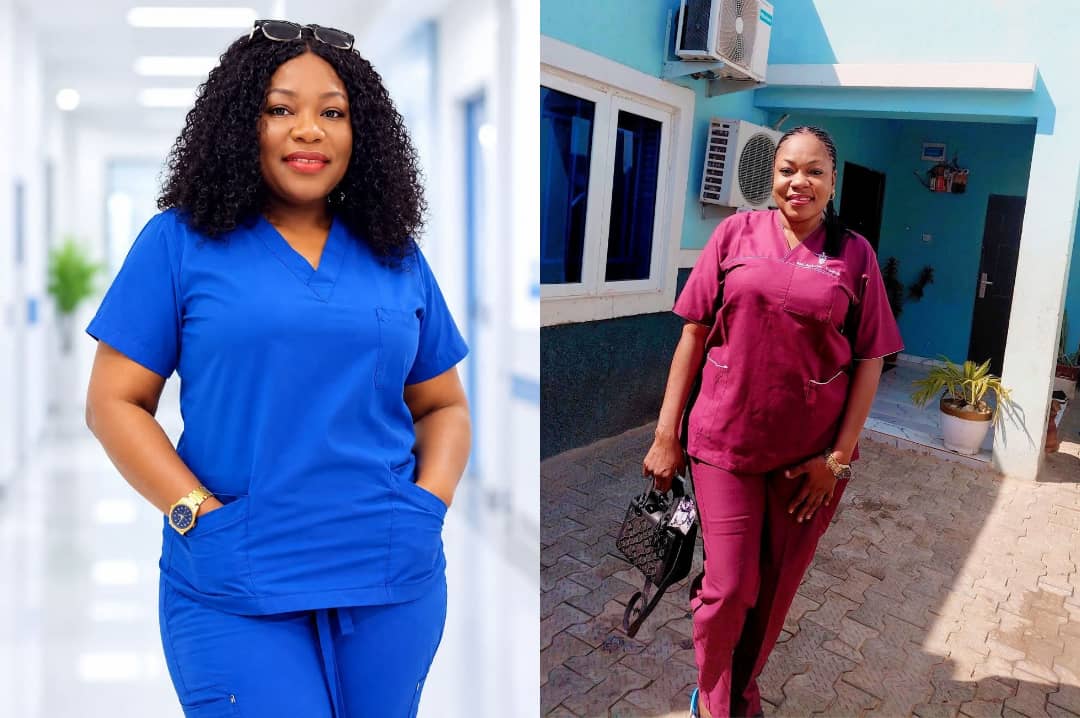
For Rahila Nehemiah Kama, excellence began long before she understood what a university degree meant. Growing up in Dashen, a remote community in Jada Local Government Area of Adamawa State, Kama had no electricity or pipe-borne water.
For the first three years of primary school, she and other pupils learnt under trees, because there were not enough classrooms. Yet, none of that stopped Kama.
In her words: “When the rains came, lessons stopped. We would be discharged to go home and come back after the rain, because there were not enough classrooms to accommodate us all.”
As a child, she enrolled herself in school. While children passed her home on their way to school, she decided she wanted to be one of them. Without waiting for her parents to enrol her, she followed the children to school, sometimes wearing ordinary clothes.However, her father did not realise how serious Kama was about education, until he was invited to her school’s speech and prize-giving ceremony. There, he discovered that his daughter had emerged first in her class.
Years later, the little girl from rural Adamawa would become a nurse, entrepreneur, humanitarian, and graduate with First Class honours in Health Education. She was also the best graduating student at the School of Post-Basic Nursing, National Orthopaedic Hospital, Dala, Kano. She would later earn a master’s degree in Health Education with a strong academic record.
Yet, after years of education, professional service and a desire to serve Nigeria, Kama, now 42 and a mother of four, has relocated abroad, to Oman.
Her story captured a painful contradiction confronting Nigeria’s healthcare system: a country producing highly educated health professionals, but many leaving for countries where they believe their skills, labour and future will be better rewarded.
From A Remote Village To Academic Excellence
Nurse Kama’s decision to become a nurse was shaped by her childhood. Her father worked with the Lutheran Missionary Dispensary in Dashen, while her elder sister was a nurse.
She recalls being fascinated by her sister’s work, saying: “I always admire it when I see people coming in at night seeking her attention to attend to their medical emergencies, to conduct deliveries among other things.”
That early exposure eventually became a career, even though Kama’s academic journey was anything but straightforward. According to her, she married early, became a mother and simultaneously took on employment and business responsibilities while pursuing her education.
Meanwhile, during her degree programme, she worked with an NGO, while running a business and raising her children. She said her day could begin at 4am where she would cook, prepare her children for school, drive to lectures, leave for work and later return for afternoon classes.
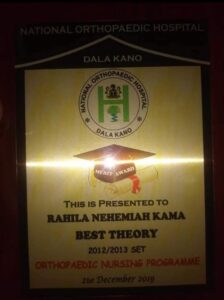
However, despite the pressure, Kama graduated with First Class honours in Health Education, recording a Cumulative Grade Point Average (CGPA) of 4.68. She had earlier emerged as the overall best graduating student at the School of Post-Basic Nursing, National Orthopaedic Hospital, Dala, Kano. She later pursued a master’s degree in Health Education and again recorded an impressive academic performance.
For the mother of four, those achievements were evidence that motherhood, marriage, work and adversity had not succeeded in stopping her.
“I don’t think there’s any situation in life that stops me from aiming towards greatness,” she said.
She Wanted To Stay
However, the most striking part of Kama’s story is that migration was never her original plan. She had wanted to remain in Nigeria and serve her country.
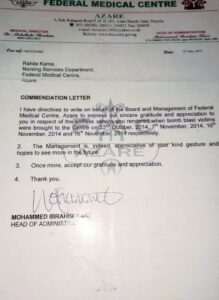
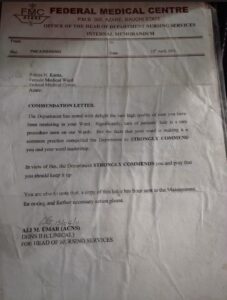
While working at the Federal Medical Centre, Azare, she received three commendation letters for dedication to patients and honesty. But eventually, her love for Nigeria collided with the realities of working and living in the country, and her decision changed.
She said: “I have never thought of relocating. I’ve always had Nigeria in mind with love to serve my country.”
She added: “It got to a point that the country itself is not encouraging, the resources available are not enough to make ends meet and I told myself and I just have to go out there and look for greener pastures.” Kama’s decision reflected a much larger migration trend.
According to Punch, the latest report on the number of nursing and midwifery professionals on the Nursing and Midwifery Council register from April 1, 2023, to March 31, 2024, showed 3,173 Nigerian-trained nurses and midwives got licensed to practise in the United Kingdom in one year.
The figures offer context to Kama’s decision. She is not an isolated case. She is part of a growing movement of Nigerian health professionals seeking better opportunities outside the country.
However, while migration can offer individual professionals a better future, it raises a difficult question for a country like Nigeria which is still struggling with healthcare delivery.
What Happens When The People Nigeria Needs Most Are The People It Cannot Retain?
The issue is not just salary. For Nurse Hassan Abdullahi who works with the Nursing and Midwifery Council of Nigeria (NMCN) in Standards and Accreditation, there is no single reason why nurses leave the country.
He said the motivations range from family and education to security, salary and better living conditions, but acknowledged that poor working conditions remain a major factor.
Abdullahi said: “Our hospitals are not doing fine. The pressure is too much. Experienced staff have left. And other advanced countries are experiencing shortage of manpower. So, they are ready to pay anything to get health providers.”
According to him, the problem extends beyond what nurses earn. He argued that health workers need functioning hospitals, adequate equipment and an environment where they can practise what they were trained to do.
He said: “The working conditions include the environment itself, the tools themselves, the facilities to work with, the amenities such as water, electricity, internet, how to do telemedicine, how to use AI in health!”
Meanwhile, that argument resonates with Kama’s experience abroad.
‘The Healthcare Here Can’t Be Compared’
After relocating, Kama said the difference between the healthcare environment she left behind in Nigeria, and the one she has encountered abroad is significant.
In her words: “The healthcare here can’t be compared to the Nigerian standard because, basically, the government here is working. The private sector is also operating according to standard.”
Although she does not believe Nigerian nurses lack competence, she said: “Most Nigerians are capable. Even here we have a lot of Nigerians in the healthcare sector performing wonderfully well.”
The challenge, she said, is having the infrastructure and equipment required to translate that competence into effective healthcare delivery. And Abdullahi made a similar argument.
He said Nigerian health professionals often possess the knowledge and skills, but lack the equipment necessary to practise effectively. He also highlighted that the government does not often carry out recruitment exercises.
“How many times have you seen adverts from federal governments of Nigeria looking for nurses and midwives? That is a very serious problem,” he said.
Abdullahi, who’s also an activist, called on the government to employ nurses, invest in modern hospitals and life-saving equipment. He argued that improving healthcare infrastructure should precede or accompany efforts to improve salaries.
‘Salary Is Part Of The Problem, But Not The Biggest’
While poor remuneration is widely cited as a reason health workers leave Nigeria, Abdullahi said salary alone does not explain the exodus.
He said: “Salary is not the biggest problem. It’s part of the problem, but not the biggest.”
He believes the bigger issue is the inability of many health facilities to provide professionals with the tools they need.
His position is that the government must strengthen nursing and medical schools, improve training, provide modern equipment, recruit specialists and improve hospital infrastructure. Only then should remuneration be considered alongside the wider working environment.
“There’s nothing bad when you pay a nurse a million naira,” he said, adding: “But when the politicians are stealing the money, they are not using the money properly.”
A System Struggling To Retain Its Own Workforce
The World Health Organization (WHO) has previously identified Nigeria among countries facing a severe shortage of health workers. In 2024, the Nigerian government approved a National Health Workforce Migration Policy designed partly to improve retention, promote ethical recruitment and strengthen workforce planning.
Additionally, Abdullahi said understaffing remains severe, particularly outside major teaching hospitals. He argued that research and policy discussions often focus on tertiary institutions, while neglecting general hospitals and primary healthcare centres where most Nigerians receive care.
He said: “Over 70 percent of our people live in the rural community,” adding that some local government areas have populations running into hundreds of thousands but may have only one or two doctors and a handful of nurses.
“That is a very serious problem,” Abdullahi said.
Effect Of Nurses Migrating On Those Left Behind
While migration does not only affect the nurses who leave, it also affects those who remain. Abdullahi said seeing former colleagues abroad can be demoralising for nurses still working in Nigeria.
He said: “You go to the UK, pose in a very beautiful place with a very beautiful car, having a better future, it’s highly intimidating.”
He also said the desire to migrate has become so common among young health professionals that it is increasingly part of conversations even among students.
He noted that when nursing or medical students are asked whether they intend to “japa” (migrate), a significant proportion raise their hands. The result, he said, is a workforce that is already stretched, while experienced professionals continue to leave.
‘I Don’t Have Plans Of Coming Back To Work’
Nurse Kama’s plans illustrate the permanence that migration can sometimes acquire.She does not rule out returning to Nigeria, as she wants to visit home and possibly retire there someday. However, she hopes to give back to society, but definitely not return to work in Nigeria again.
She said: “If I tell you I have plans of coming back to work in Nigeria, I might be lying.”
Her aim is to build enough financial security abroad to enjoy a more comfortable retirement.
“I basically relocated so that I can have a soft life after retirement,” she said.For Nigeria, that admission is significant. It suggests that migration is not necessarily a temporary search for experience. For some professionals, it is a permanent decision to build their future elsewhere.
The Brilliant People Nigeria Is Losing
Abdullahi said Kama’s story is replicated by many highly educated Nigerian nurses. He pointed to Nigerian nurses whom he preferred not to mention by name, who have gone abroad to pursue master’s and doctoral degrees, secured international grants and taken up academic and research positions.
He particularly mentioned a Nigerian female nurse and researcher whom he described as an exceptionally accomplished professional, now working in the United States. He also cited Nigerian nursing professionals working in Canada and other countries.
Their success abroad, he argued, demonstrates the quality of professionals Nigeria is losing.
“It’s a loss,” he said, adding: “They have performed excellently well. They have written their names in gold on the global stage, and they are doing extremely well making Nigeria proud.”
But Abdullahi’s argument goes beyond lamenting migration. He wants policymakers to understand that Nigerian professionals can compete internationally when given the opportunity.
The debate around Nigeria’s nursing brain drain often begins and ends with salaries, but the experiences of Kama and Abdullahi suggest a more complicated picture.
He highlighted that a nurse may want better pay, and also functional equipment just like a doctor who also wants a higher salary and a hospital where the necessary machines work.
He said a health professional may want security, but also quality education for their children. And an experienced professional may want to know that after decades of service, retirement will not mean financial insecurity.
For Kama, all of those considerations eventually outweighed her desire to remain in Nigeria. However, she said her new environment is not without challenges. She left behind family and loved ones and had to adapt to a new culture, food and way of life.
Although before leaving Nigeria, she said she had researched her destination before moving and is gradually settling in.
“It may not necessarily be from scratch but I’m starting from somewhere I’m not supposed to, but it’s still far better than what we have back home,” she said.
What Would Make Them Stay?
For better healthcare delivery in Nigeria, Abdullahi suggested strengthening the foundation. He wants the government to invest in nursing and medical education. Improve hospitals, provide life-saving equipment, recruit and train specialists, strengthen primary healthcare and improve nurses’ working conditions.
He also wants nurses to have a stronger voice in health-sector policymaking.
“Nurses are not represented at all,” he said, arguing that the profession needs greater representation in hospital management and policy development.
WHO described nurses as the largest occupational group in the health workforce and an indispensable component of health systems. For Nigeria, retaining them is therefore not merely a labour issue. It is a health system issue.
From Surviving To Advocating
Kama’s ambitions extend beyond earning money abroad. She wants to advocate for girl-child education, women and survivors of domestic violence. She also hopes to write a book about her life and the choices women make in marriage.
She noted that success is not defined solely by academic distinctions or financial achievement. She said it is also about raising her four children to achieve what she could not, and reaching a point where she can help vulnerable people on a larger scale.
She described herself as unstoppable. Her life provides evidence for the claim. The little girl who once followed other children to school from a remote Adamawa village became the best graduating student in post-basic nursing and later earned First Class honours in Health Education.
She raised children while studying, working, running a business, and at the same time caring for patients.
She earned commendations and has now left Nigeria. Her departure is a personal victory in one sense; a woman pursuing a better future for herself and her children, but also a national loss.
Nigeria may continue producing brilliant nurses like Kama. However, the more difficult question is whether it can create a healthcare system capable of convincing them to stay.
When a country loses a nurse who once wanted to serve it, the loss is not measured only by the vacant position she leaves behind. It is measured by the patients who may never benefit from her experience, the younger nurses who will not learn from her, and the healthcare system that continues to struggle without the professionals it has spent years training.
Nurse Kama left in search of a better future. The question Nigeria must answer is why that future could not be built here at home.
categories
recent posts


IMF Says Malawi Making Progress on Economic Recovery Reforms

NIGERIA: Makinde Campaign Sets 68m-Vote Target As APM Kicks Off 2027 Drive

No comments yet. Be the first to comment!