By Deborah Akur Chol, South Sudan
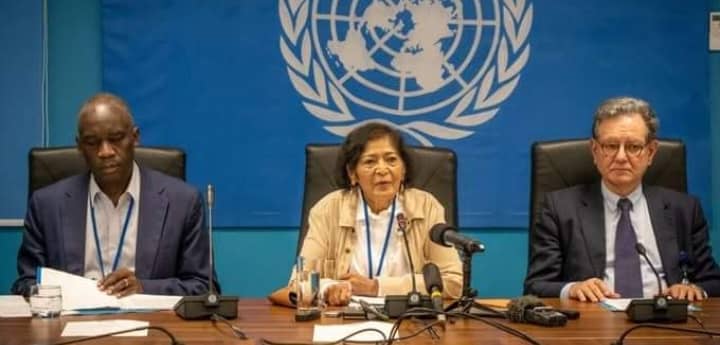
The ongoing political turmoil in South Sudan is intensifying armed violence, exacerbating the already critical human rights and humanitarian situation, and increasing instability in the region, warned the UN Commission on Human Rights in South Sudan today.
Despite a decade of efforts from the African Union and regional stakeholders to promote the peace process, leaders in South Sudan have consistently hindered progress, once again bringing the nation to a critical juncture. Armed confrontations are occurring at unprecedented levels since the signing of the cessation of hostilities in 2017, with civilians suffering the most from human rights abuses and forced displacements, the Commission stated.
As the Commission wrapped up its mission at the African Union headquarters in Addis Ababa, it highlighted the ongoing lack of justice and accountability in South Sudan, which continues to entrench political stagnation, impunity, conflict, and corruption. The latest political discord among the country’s leaders has emboldened armed factions, igniting renewed violence and displacing thousands. The Commission’s recent report, Plundering a Nation: How Rampant Corruption Unleashed a Human Rights Crisis in South Sudan, underscores that widespread corruption and the misappropriation of public funds are major drivers of conflict, depriving citizens of their fundamental rights.
“The persistent political crisis, escalating violence, and rampant corruption reflect a failure of leadership and a lack of consensus on implementing the peace agreement and political transition commitments,” remarked Commissioner Barney Afako, who led the mission to the AU. “If there isn’t immediate, sustained, and coordinated political engagement from the region, South Sudan risks descending into full-scale conflict, leading to unimaginable human rights abuses for its population and beyond. South Sudanese are looking to the African Union and regional leaders for intervention to avert this preventable disaster.”
The Commission also met with African Union officials, stressing the urgency of establishing transitional justice mechanisms as outlined in Chapter V of the 2018 Revitalised Agreement on the Resolution of the Conflict in South Sudan, particularly the Hybrid Court. More than ten years since the conflict began in December 2013, victims continue to await credible justice and reparations for the severe violations they have suffered. Despite multiple calls from the AU Peace and Security Council in March and June 2025 for the South Sudanese government to collaborate with the AU on the Hybrid Court’s framework, progress remains stalled.
“Justice is now more critical than ever for South Sudan,” stated Yasmin Sooka, Chair of the Commission. “The commitments made to victims long ago have yet to be fulfilled. The Hybrid Court must transition from mere plans to concrete implementation the African Union has both the mandate and the moral obligation to ensure comprehensive transitional justice in alignment with its Transitional Justice Policy. A Hybrid Court that holds accountable those responsible for past wrongdoing while strengthening South Sudan’s judicial systems can create a transformative legacy, reinforcing unity, the rule of law, and human rights in the country.”
In 2025 alone, renewed fighting has forced approximately 300,000 South Sudanese to flee the country, primarily due to the escalating conflict, with significant new arrivals in Sudan (148,000), Ethiopia (50,000), Uganda (50,000), the Democratic Republic of Congo (30,000), and Kenya (25,000). The region is now home to over 2.5 million South Sudanese refugees, with South Sudan facing an internally displaced population of 2 million, as well as hosting 560,000 refugees fleeing conflict in Sudan. Women continue to bear the greatest burdens and risks associated with displacement.
“The ongoing armed clashes, widespread displacement, and the fracturing of the peace agreement signed seven years ago illustrate that South Sudan cannot achieve reconstruction without justice and stability,” emphasised Commissioner Carlos Castresana Fernández. “Effective and independent justice mechanisms are essential to deter recurring atrocities, disrupt cycles of impunity, and foster healing. The AU and regional partners must act urgently not just to prevent another war, but to lay the groundwork for a just peace based on the rule of law.”
While in Addis Ababa, the Commission consulted with members of the AU Ad Hoc Committee on South Sudan (C5 group), the AU Peace and Security Council, the African Commission on Human and Peoples’ Rights, diplomats, UN officials, IGAD, and senior AU representatives including those from the Office of the Legal Counsel. The Commission emphasised the need for enhanced regional efforts to de-escalate tensions and address the rising armed conflicts in South Sudan, urging sustained momentum towards a comprehensive transitional justice agenda. It also called for the Office of the Legal Counsel to expedite guidelines for establishing the Hybrid Court, complementing ongoing efforts to establish the Commission for Truth, Reconciliation and Healing and the Compensation and Reparation Authority.
As members of the African Union Peace and Security Council and the United Nations Security Council prepare to convene in Addis Ababa for their annual joint seminar, the Commission urged both bodies to take decisive, coordinated action addressing South Sudan’s escalating crisis. It called for the prioritisation of justice and accountability including the rapid establishment of the Hybrid Court in South Sudan during their discussions, recognising that impunity and corruption are the primary barriers to peace, stability, and human rights in the country.
The Commission reiterated that only through an inclusive and credible political transition, supported by the AU, IGAD, the United Nations, and other peace agreement guarantors, in partnership with the international community, can further deterioration and rights violations be prevented. It called for ongoing diplomatic engagement to ensure that all stakeholders, including armed and political groups currently outside the peace framework, are incorporated into a collaborative process that commits to peace and human rights.
“The unfolding crisis in South Sudan results from deliberate choices made by its leadership that prioritise their interests over those of the populace,” Commissioner Sooka stated. “It is imperative that the region and the international community compel South Sudan’s leaders to choose differently, prioritising the well-being of their people.”
categories
recent posts
IMF Says Malawi Making Progress on Economic Recovery Reforms
NIGERIA: Makinde Campaign Sets 68m-Vote Target As APM Kicks Off 2027 Drive
NIGERIA: INEC Assures On Election Integrity As 2027 Polls Enter Final 100-Day Countdown

Messi Ends Argentina Career on a High