
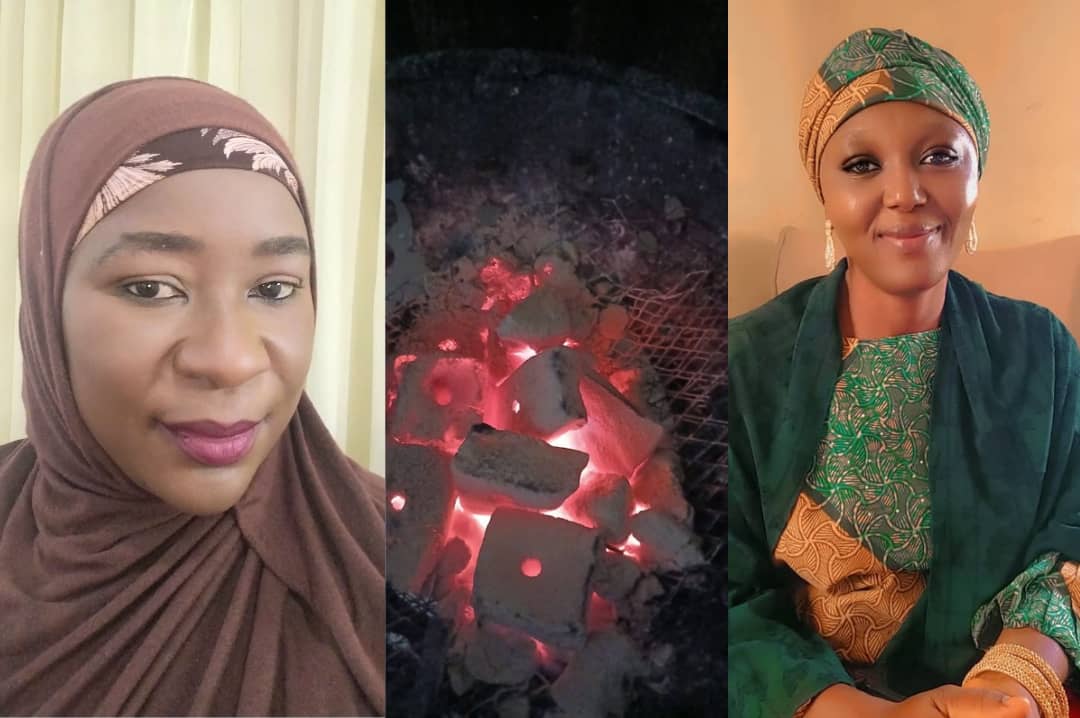
By Munyal Manunyi
At the bottom of most charcoal bags lies a portion that few buyers want.
It is the fine black dust and broken pieces left behind after the larger lumps have been removed. For charcoal sellers, it is mostly waste, but for households, it is often swept away or thrown into the bin.
But what if that waste could be given another life? In Yola the Adamawa State capital and Gombe State, two young Nigerian women are experimenting with precisely that idea: collecting charcoal dust and other waste materials and turning them into charcoal briquettes.
Although their work is still largely at the small-scale and pre-commercial stages, for them, the black dust that others discard represents more than waste.
It could become cooking fuel, a small business and an opportunity to reduce the amount of useful material going to waste.
For 18-year-old Mustapha Habiba, a charcoal seller living in Gwagwalada Area Council in FCT-Abuja with her parents, the idea is entirely new.
She said: “We thrash the powder that remains from the bags. We do not know that people buy them to make good use of them.
I’ve never heard of a briquette before.”Meanwhile, Habiba has used charcoal since she was about nine years old.
She said her family spends between ₦500 and ₦1,000 on charcoal on an ordinary day, although cooking foods such as beans can push their daily consumption to about ₦2,000.
The young lady who also sells charcoal told AFRICAN CULTURE TV that sellers in her area buy charcoal from suppliers who bring it from the forest and resell it to consumers in bags or smaller portions.
She said a bag can be bought for about ₦9,500 and sold for around ₦12,000, while dividing the charcoal into smaller ₦200 portions can yield higher returns.
However, amid all the buying and selling, charcoal dust is one part of the product that is routinely ignored.
Seeing Value In What Others Throw Away
For Khadija Abubakar Bobbo, a lecturer in the Department of Human Anatomy at Gombe State University, seeing value in waste is not a new idea.
Her interest in environmental sustainability and waste-to-wealth initiatives began in 2016 when she volunteered with Jewel Environment Initiatives.
During that period, she participated in projects that converted discarded polythene bags into interlocking bricks. She also experimented with agricultural waste, including groundnut bark, corn bark and stalks, dry leaves and stems, converting them into charcoal.
Using cassava starch and a small quantity of fine clay soil as binding agents, she and others experimented with transforming waste materials into cooking fuel.
Moving forward, by early 2025, Bobbo had shifted part of her attention towards grassroots women’s empowerment.
She began training local women to make use of coal or charcoal dust, the fine material commonly discarded at the bottom of commercial charcoal bags.
Rather than allowing the material to become refuse, the women collect and clean it, grind it into a fine powder, mix it with a starch-based binder and mould it into briquettes.
Some of the briquettes are designed in small shapes for burning incense and traditional perfumes.
Bobbo explained that the project is currently in the training and pre-commercial phase, but she hopes to move towards commercial production. Her proposed model has two major raw-material sources.
The first is charcoal dust sourced directly from local charcoal vendors, while the second is agricultural waste.
She hopes eventually to obtain large quantities of materials such as corn stalks, rice husks and groundnut peels from farmers and agricultural processors, carbonise them and turn the resulting material into briquettes.
However, the first option is relatively straightforward because the charcoal has already been carbonised, but the second one requires additional processing and equipment, including an iron drum for carbonising agricultural waste.
Another Experiment, Another Woman

In Yola, Adamawa State, Mrs Patu Mohamed Tuga, an economic planner and teacher, is also experimenting with charcoal briquettes.
She started producing briquettes at home only recently, although she had heard about the idea several years earlier.
Her first encounter with the concept came in 2023 during a training organised under the Multisectoral Crisis Recovery Project (MCRP).
She said during discussions at the training, a woman told her that she had participated in a similar programme where participants were taught how to produce charcoal briquettes.
Meanwhile, Tuga was curious, but did not immediately pursue the idea, not until years later.
She said: “I had charcoal dust. So I now grind it and then went to the internet and did one or two research.” Today, she collects charcoal dust from local vendors and sometimes recycles the residue left after buying a bag of charcoal for household use.
She estimates that she can gather about 25 kilograms of charcoal dust in a day and roughly 100 kilograms in a week, depending on availability.
Although charcoal dust is her main raw material, she says other materials can also be used, including sawdust, rice stalks, groundnut shells and coconut shells.
For her own production, however, she mainly uses charcoal dust, cassava flour and loamy soil.
“I make charcoal briquettes using waste and the local material that can be sourced within my environment,” Tuga said.
She further explained that her goal is not only to produce another form of fuel, but also to encourage people to look differently at waste.
In her words: “The idea is to recycle waste and have a clean and more eco-friendly environment,”
From Black Dust To Briquette
The production process is relatively simple at the scale at which the women currently operate.
First, charcoal dust is collected and cleaned to remove stones and other large impurities.
The material is then ground into a fine powder.
A binder, such as cassava starch or flour, is added and mixed with the charcoal dust and the mixture is then moulded into the desired shape and left to dry.
Bobbo uses silicone moulds for some of her small briquettes, particularly those intended for burning incense, while Tuga uses locally available moulds and sun-dries her products.
The simplicity of the process is part of the attraction.
Neither woman currently relies on an industrial production line, instead, they are experimenting with materials and methods that can be accessed locally and, in some cases, within the home.But simplicity does not necessarily mean that every briquette produced through such a process will have the same quality or burning characteristics.
According to Felix Wilfred Burari, a Professor of Renewable Energy and Energy Studies in the Department of Physics at Abubakar Tafawa Balewa University, Bauchi, in a chat with AFRICAN CULTURE TV, turning charcoal dust into a briquette essentially involves compressing loose waste powder with a binder into a solid form.
He noted that this makes the material easier to handle and can influence how it burns, while explaining that: “The burning quality of a briquette is determined by its material composition, physical density, moisture content and chemical properties,”
He explained that these factors determine how easily the briquette ignites, the amount of heat it releases and how long it burns.
Is It Really Cleaner?
For producers like Tuga and Bobbo, one of the attractions of briquettes is the possibility of producing a fuel that burns more efficiently and creates less waste.
Tuga said her briquettes produce less smoke than the conventional charcoal she normally uses.
She also said they ignite relatively easily when arranged properly on a cooking stove and lit with paper.
However, environmental benefits should not simply be assumed because a product is made from waste.
Prof. Burari explained that the quality and emissions of briquettes depend heavily on what goes into them and how they are produced.
According to him, briquettes made from fully carbonised material with low moisture content and appropriate natural binders are more likely to burn with less smoke than poorly prepared products.
High moisture content, excessive volatile matter, inappropriate chemical binders and restricted airflow can increase smoke production.
This distinction is important because the word “briquette” does not automatically mean “clean fuel”.
The raw material, binder, production method and combustion conditions all matter.
According to a 2024 study published in Heliyon by researchers from Kenyatta University, the performance and emissions of charcoal-dust briquettes vary depending on the binder used and its proportion, as well as other physical and combustion characteristics.
The researchers tested charcoal-dust briquettes made with starch, paper and algae binders, measuring factors including calorific value, ignition time, burning rate and emissions.
The Health Question
However, producers and consumers are not to overlook the health factor.
A cooking fuel may be cheap and made from waste, but doesn’t automatically make it safe for use indoors.
Prof. Burari warned that poorly produced briquettes can release carbon monoxide, fine particulate matter and other harmful substances.
He noted that exposure to indoor air pollution can have serious consequences, particularly when cooking takes place in poorly ventilated spaces.
He therefore suggested that consumers should be interested in testing that establishes the quality and composition of briquettes before using them for cooking.
According to him, such testing can include analysis of moisture, ash, calorific value and other fuel characteristics, while the safety of binders and raw materials also needs to be established.
This is particularly relevant to both Tuga and Bobbo since their production is still largely experimental and small-scale. Neither has presented independent laboratory results establishing the emissions profile, calorific value or health performance of the briquettes described.
That leaves an important question for the next stage of their work, highlighting whether or not a product that works in a household experiment can also meet the safety and quality requirements expected of a commercial cooking fuel.
The Economics Of Waste
For Tuga, the attraction is not only environmental, there is money to be made if production can be scaled.
She says charcoal dust is relatively cheap to obtain, while cassava flour serves as her principal binder.
She estimates that producing 50kg of briquettes would cost approximately ₦11,500.Her proposed selling price is about ₦320 per kilogramme, which would put the selling value of 50kg at approximately ₦16,000.That leaves a difference of about ₦4,500 before accounting for any production expenses that may not have been included in her estimate.
Tuga also compares the economics based on how long she believes briquettes can burn relative to conventional charcoal.
She highlighted that although a 50kg bag of briquettes could be more expensive upfront than a comparable quantity of conventional charcoal, its longer burning time could make it more economical over time.
Meanwhile, the actual economic advantage depends on the weight of the charcoal being compared, burning conditions, cooking habits, heat output and the amount of food prepared.A laboratory or controlled household test would provide stronger evidence than estimates based solely on experience.
Still, the basic business proposition is straightforward: obtain a material that others regard as waste, process it and sell it as a useful product.
The Market Is Already There
For both women, the potential market is not difficult to identify. According to a 2024 publication by National Bureau of Statistics (NBS), approximately 70 percent of the Nigerian population relies on solid fuel for household cooking, while charcoal is also used for activities ranging from food preparation to incense and traditional perfumes.Tuga currently produces on a small scale, partly for household consumption and partly to test the market.
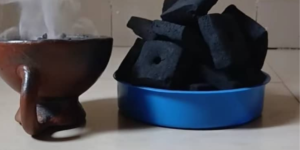
She said some of her current buyers are people who sell incense.
For her, the immediate objective is to demonstrate that briquettes can be made locally without requiring people to travel far in search of specialised materials.
“An ordinary household can produce for their own use,” she said.Therefore, moving from household production to a profitable commercial enterprise would require more than raw materials.
It would require reliable supply chains, appropriate machinery, drying systems, packaging, quality control, market development and capital.
Challenges Ahead
The women may have access to charcoal dust today, but increased demand could change the economics.
Tuga predicts that if the business becomes profitable, suppliers who currently give away or sell charcoal waste cheaply may begin charging more for it.
Then there is the problem of drying.
Both producers rely heavily on sunlight, making production vulnerable to rainfall.
For Tuga, the rainy season is already a challenge.
Commercial production would therefore require a more reliable drying system.
Bobbo’s proposed agricultural-waste model would present another challenge. Unlike charcoal dust, which is already carbonised, raw corn stalks, rice husks and groundnut peels would first need to undergo carbonisation before being converted into charcoal briquettes.
That requires additional equipment, energy and labour. She estimates that a locally fabricated iron drum could cost around ₦20,000 as a one time capital expenditure for small-scale carbonisation.
A Second Life For Agricultural Waste
The agricultural waste option could, however, make the concept more significant.Nigeria generates large quantities of agricultural residues every year.
Some of these materials have limited economic value and are often burned, dumped or left to decay.
For Bobbo, converting such materials into fuel could create another avenue for waste utilisation while potentially providing income opportunities for women.
Her vision is to source corn stalks from farmers, rice husks from processing companies and groundnut peels from local farmers, then carbonise and process them into briquettes.
The idea connects two problems (waste management and access to alternative energy), but whether it can become a sustainable solution depends on the efficiency and environmental impact of the entire process.
Beyond The Waste
Back at the charcoal stalls, the picture is much simpler: a seller opens a bag, customers pick out the larger pieces and the dust settles at the bottom, then it is swept away.
But for sellers such as Mustapha Habiba and Lucy Moses, charcoal remains primarily a commodity to buy and sell.
Habiba said she had never heard of briquettes before being contacted for this story.
Moses, another Abuja charcoal seller, said she started by purchasing charcoal in small quantities and dividing it into smaller portions for sale.
She said she could buy a bag for around ₦9,000 and make between ₦13,000 and ₦14,000 when selling it in smaller portions, depending on the market.But like other sellers, she sees the residue as waste, and that is precisely the gap Bobbo and Tuga are trying to fill.They are not the first people to explore the conversion of waste materials into briquettes, and their work is still at a stage where claims about commercial viability, environmental benefits and health performance need further testing.But their experiments raise a simple question with wider implications: What if some of the waste Nigerians routinely throw away could become a source of income and energy?For now, the answer is being tested in small spaces, in homes, among charcoal sellers and through grassroots training.The black dust at the bottom of a charcoal bag may look worthless, but in the hands of entrepreneurs willing to experiment, it could become something else entirely: a product, a livelihood and perhaps the beginning of a different way of thinking about waste
categories
recent posts
IMF Says Malawi Making Progress on Economic Recovery Reforms
NIGERIA: Makinde Campaign Sets 68m-Vote Target As APM Kicks Off 2027 Drive

NIGERIA: INEC Assures On Election Integrity As 2027 Polls Enter Final 100-Day Countdown

Messi Ends Argentina Career on a High