
By Sibir Dzumah
When Niccolò Machiavelli, that shrewd Florentine observer of power, wrote The Discourses, he warned that republics decline not because of their enemies, but because of their internal contradictions. Great nations, he argued, fall when those entrusted with power seek security over reform, comfort over confrontation. Nigeria, six decades after independence, still finds itself repeating the mistakes of ancient republics – aspiring to greatness, yet often refusing the discipline it demands.
The 2025 Phillips Consulting State Performance index (pSPI), like a modern-day mirror for princes, offers a rare empirical portrait of Nigerian subnational governance. It does not flatter. It does not moralise. It simply reveals. In doing so, it confirms what Plato lamented in The Republic – that cities are reflections of their leaders’ souls. When a state rises, it is because its governors have chosen reason over impulse. When it fails, it is because decay has found residence not in its geography, but in its politics.
The pSPI ranks Nigeria’s 36 states based on two pillars: objective performance (70 percent) and citizen perception (30 percent). It covers indicators across fiscal strength, service delivery, social wellbeing, digital infrastructure, and economic potential. But more than a technocratic document, it functions as a contemporary Book of Kings, chronicling which states have managed to govern wisely and which continue to wander in the wilderness.
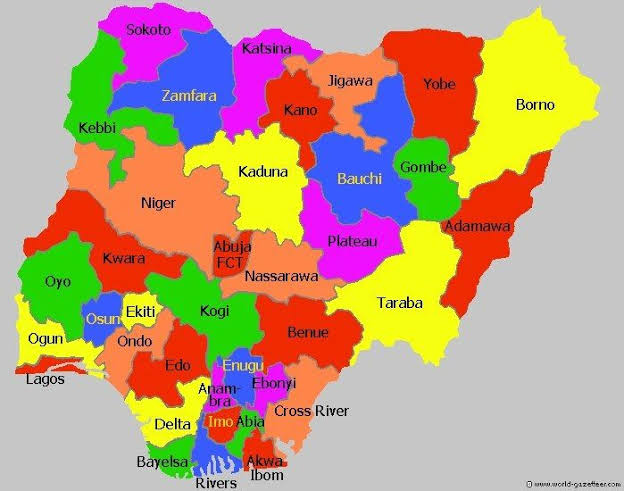
Let us begin in the North Central, a region often overlooked in the grand narratives of Nigerian development. Here, Niger State emerges as a quiet reformer. Once ranked 29th in 2024, it has climbed to fifth place. This is no accident. Niger’s ascent mirrors the story of Lycurgus of Sparta, who, according to Plutarch, reformed a chaotic state not through speeches but through laws that structured life with clarity and restraint. Niger’s performance shows signs of disciplined public finance and effective service delivery, a model of order amidst the usual Nigerian din.
By contrast, Benue, rich in cultural heritage and agricultural potential, finds itself stuck in mediocrity. Its problem is not resources but resolve. Much like the decadent Rome of late antiquity, Benue appears trapped in the illusion that past glory can substitute for present governance. It ranks poorly in infrastructure and local engagement, evoking St. Augustine’s lament in The City of God: that once mighty structures fall not because the heavens curse them, but because their foundations are ignored.
In the North East, Adamawa stands out not merely for its statistics but for its symbolism. This is a region scarred by violence and displacement, yet Adamawa has risen to fourth place nationally. The lesson is one Thucydides taught us in The History of the Peloponnesian War: cities under siege either collapse or transform. Adamawa has chosen transformation. Its leadership has moved from reactive governance to proactive investment. There are echoes here of Pericles’ Athens, where reasoned leadership held a fractured polity together through vision and resolve.
Not far from Adamawa, Borno lies at the bottom of the rankings. It is tempting to blame insurgency alone. But history warns against such a singular excuse. Even Carthage, besieged by Rome, still managed a flourishing internal life before its eventual fall. Borno’s failure is not only one of security but of governance inertia. Without strong institutions, external aid becomes a temporary balm, not a cure.
In the North West, we encounter a parable of two cities. Jigawa, largely agrarian and often peripheral in national discourse, ranks eighth overall. It has no mega city, no oil wealth. Yet it ranks first in citizen perception. This suggests a leadership style rooted in engagement, predictability, and order, the sort of republican virtue Montesquieu believed essential for durable governance. Kano, on the other hand, once the commercial heart of the region, has suffered a dramatic fall from seventh to thirtieth place. The state, like Shakespeare’s King Lear, seems to have lost the plot while clinging to the crown. Political instability and administrative inconsistency have turned legacy into liability.
The South West, long Nigeria’s template for progressive governance, delivers a study in contradiction. Lagos remains first in the nation, driven by strong financials and project execution. Yet, it ranks 32nd in perception. The people are exhausted. Like Dickens’ London in Hard Times, Lagos dazzles with infrastructure but stumbles on inclusion. Its urban core thrives, while the margins groan. Leadership here must remember what Solon of Athens once insisted: that a just city is not one of stone and gold, but one where every citizen can breathe.
Ekiti, a state once celebrated for education and cultural refinement, now ranks 26th. Its descent is not merely administrative but symbolic. It is the tale of Cicero’s Rome, where lofty ideals fell before factionalism and complacency. Ekiti has the tools, the minds, and the moral capital to lead, yet seems stuck in cycles of inertia. If it does not act, it risks becoming a museum of its own promise.
The South East is perhaps Nigeria’s most emotionally charged region. Yet in 2025, Abia emerges as its unexpected champion. Ranked dead last in 2024, it now stands tenth. Like Thebes reborn after civil war, Abia proves that no state is condemned to decline. Leadership changed. Priorities shifted. Budgets became public, and roads, at last, began to appear. Its citizens, long cynical, now speak of governance in the present tense.
Imo, on the other hand, is a cautionary tale. Once a top performer, it has collapsed to 31st place. Like the tragic fall of Brutus in Julius Caesar, good intentions have been outpaced by political misjudgment and public disengagement. Imo is not beyond redemption, but it must decide whether it wants to govern or merely perform.
In the South South, the contradiction becomes almost unbearable. This is Nigeria’s revenue basin, yet most of its states underperform. Cross River, with little oil, ranks fourteenth. Bayelsa, awash in petro-dollars, has fallen to 29th. What makes this disparity so troubling is its familiarity. In The Prince, Machiavelli warned that states rich in resources tend to grow lazy. Wealth, without the rigour of accountability, breeds a class of rulers more interested in preservation than progress. Bayelsa’s failure to publish an audited financial statement speaks not to a technical gap, but to a philosophical one. Governance must be earned, not inherited.
All of this brings us to the purpose of reform commissions and regional development agendas. The pSPI is not a scoreboard for bragging rights. It is a compass. It tells us what works, where it works, and what it takes to make it work. And yet, many regional leaders may skim its charts without studying its meanings. That would be a tragedy in the mold of Ozymandias, the mighty king of Shelley’s imagination, whose monuments crumbled in the desert while his inscription read, “Look on my works, ye mighty, and despair.”
We do not need despair. What we need is discipline. Development does not come from charisma. It comes from institutions. From transparency. From the courage to tell hard truths at budget meetings and town halls. As Tacitus once observed, empires fall not in battle, but in peacetime, when flattery replaces scrutiny and comfort becomes the new constitution.
So let this index be read not as the final word, but as a stern teacher’s midterm grade. Nigeria’s regions do not lack ambition. They lack follow-through. They are not short on vision; they are starved of execution.
As we have seen in Sparta, Athens, Florence, and Rome, reform is not a matter of theory. It is a matter of choice. The states that choose clarity, courage, and consistency will rise. The rest will repeat history. Not its triumphs, but its tragedies.
DISCLAIMER: This opinion does not reflect the image of African Culture TV. This is purely the opinion of the writer.
categories
recent posts
NIGERIA: FG Moves To Unlock 1,600MW Stranded Power With New Grid Company Plan

NIGERIA: Frank Mba, Seven DIGs Retire as PSC Promotes Replacements

NIGERIA: Google Expands AI Search Support To Yorùbá And Hausa