
By Ameenat Hamzat, Lagos, Nigeria
President Bola Tinubu has criticised Nigeria’s colonial-era tax system, saying it impoverished citizens through inefficiency and fragmentation, while defending ongoing reforms as a pathway to economic growth and inclusivity.
The President said the new tax regime is designed to simplify processes, attract investment, and deliver measurable benefits to Nigerians.
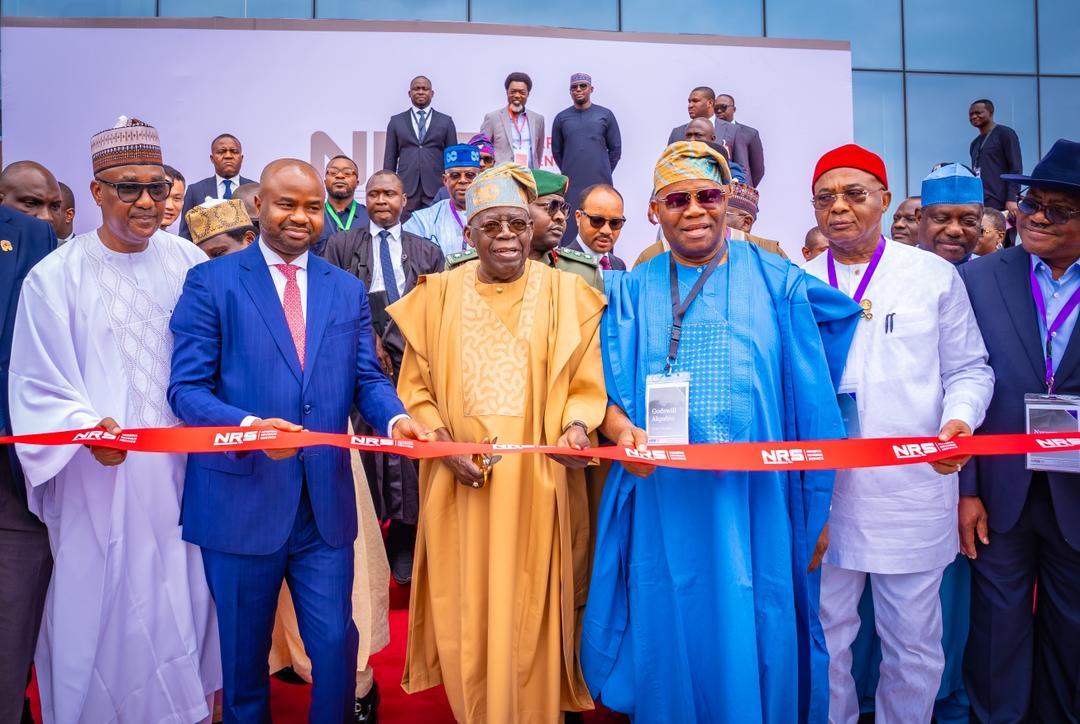
He spoke on Tuesday in Abuja during the commissioning of the 16-storey Nigeria Revenue Service headquarters.
This was contained in a press statement issued by the Special Adviser to the President on Information and Strategy, Bayo Onanuga, on Tuesday.
Tinubu said the reforms were part of a broader commitment made at the start of his administration to address structural weaknesses in the economy.
“Old tax laws created fragmentation, multiplicity, and inconsistencies that ultimately impoverished Nigerians. What we are doing now is to build a system that is fair, transparent, and investment-friendly,” he said.
The President explained that the reforms, which became fully operational in January, are aimed at strengthening Nigeria’s fiscal framework and restoring public confidence in government institutions.
“We are not gathered here merely to commission an edifice, but to mark a milestone in rebuilding our fiscal foundation and trust in public systems,” he added.
Tinubu also commended the Executive Chairman of the Nigeria Revenue Service, Zacch Adedeji, noting that the agency has been repositioned as a modern, data-driven institution capable of driving revenue growth.
He assured Nigerians that the reforms are not about increasing tax burden, but about improving efficiency, expanding coverage, and ensuring fairness.
“The direction is clear — a system that rewards enterprise, supports growth, and ensures that contributions translate into value for the people,” the President said.
Also speaking, Senate President Godswill Akpabio urged Nigerians to remain patient, noting that the administration’s economic reforms are beginning to yield results.
“There was a time Nigerians queued endlessly for fuel, but today, that is no longer the case. These are signs that reforms are working,” he said.
Speaker of the House of Representatives, Tajudeen Abbas, said the reforms have addressed longstanding structural issues within the country’s revenue system, describing them as a shift from fragmented frameworks to a more coordinated approach.
In his remarks, Adedeji described the new headquarters as a symbol of institutional transformation, noting that over 60 fragmented tax laws have been streamlined into a more coherent system.
He added that revenue collection has grown significantly in recent years, attributing the increase to improved fiscal governance and policy reforms.
The event was attended by top government officials, including ministers, lawmakers, and state governors, as w
ell as private sector stakeholders
categories
recent posts
IMF Says Malawi Making Progress on Economic Recovery Reforms
NIGERIA: Makinde Campaign Sets 68m-Vote Target As APM Kicks Off 2027 Drive
NIGERIA: INEC Assures On Election Integrity As 2027 Polls Enter Final 100-Day Countdown

Messi Ends Argentina Career on a High