
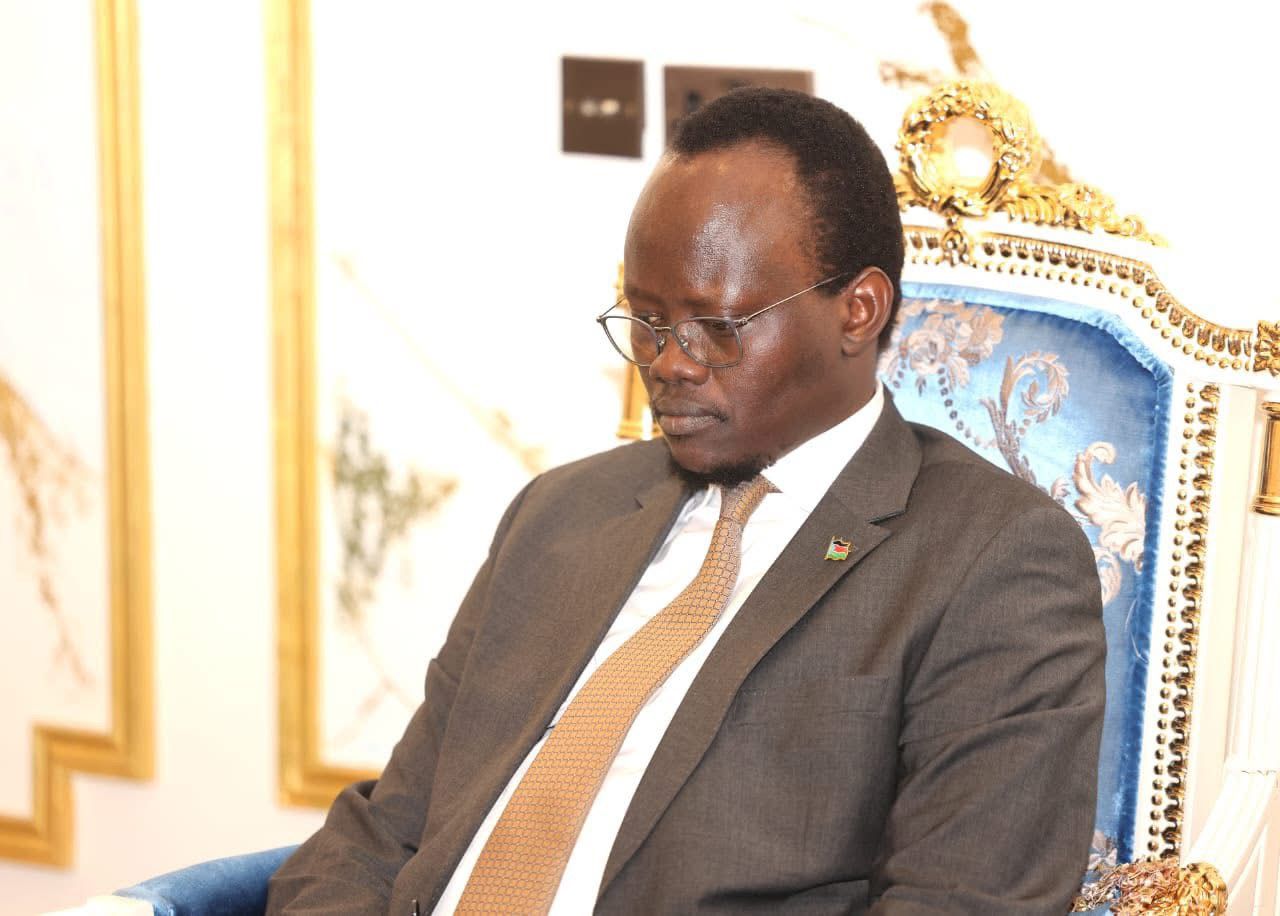
By Debora Akur Chol, Juba
South Sudan’s government announced sweeping spending cuts, a freeze on public sector hiring and plans to introduce new taxes as part of what it called an economic stabilisation and structural reform programme aimed at tackling inflation, currency weakness and chronic revenue shortfalls.
Finance Minister Baak Baranaba Chol said the Council of Ministers last week approved the Economic Stabilisation and Structural Reform Policy, which will serve as the government’s official framework for restoring confidence in public finances.
“It has been three months since my appointment and many people are asking why the ministry has been quiet,” Chol told a press conference in Juba. He said the approval of the policy marked the beginning of “economic stabilisation and structural reforms.”
Chol said the reforms would be guided by an implementation matrix outlining ministerial orders, policies and timelines, and described the programme as “cabinet-owned,” reflecting consultations within the government’s economic cluster and contributions from the central bank, the revenue authority and other institutions.
The measures were prompted by worsening economic conditions, including rising inflation, currency instability and structural imbalances driven by heavy dependence on oil revenues and weak domestic production, he said.
“Our people are undergoing suffering,” Chol said, adding that the government had recognised the need for “key decisions.” He said the cabinet had instructed authorities to abandon “fragmented interventions” in favour of a coordinated and realistic reform framework.
At the core of the plan is tighter fiscal discipline and what the minister described as restoring “budget credibility.” The government will prioritise payment of salaries for civil servants and organised forces, as well as funding for security services, peace implementation and elections.
Spending on non-essential claims, contracts and expenditures will be restricted, while recruitment across public institutions will be temporarily suspended except for critical needs, in coordination with the Ministry of Public Service.
“Budget discipline means you stick to the budget as approved by the law,” Chol said.
To boost revenues, the government plans reforms in the oil sector, expansion of non-oil revenue collection and the introduction of a value-added tax (VAT). Authorities will also review Exploration and Production Sharing Agreements (EPSA) and Status of Forces Agreements (SOFA), and cancel non-statutory tax exemptions that Chol said had significantly reduced customs and domestic revenues.
Exemptions on fuel imports, food items, construction materials and luxury vehicles will be scrapped, while exemptions granted under international agreements including for embassies, UN agencies and other international organisations will remain in place for now.
“These non-statutory exemptions have gone rampant and are affecting our revenues,” Chol said, citing reduced collections at the Nimule border crossing.
Chol said the government would work closely with the central bank to align fiscal and monetary policy, address liquidity shortages, manage the foreign exchange market and implement financial sector reforms, including the establishment of a treasury single account.
The policy also aims to stimulate private sector growth through support to small and medium-sized enterprises and public-private partnerships. Priority sectors include agriculture, livestock, fisheries, tourism, wildlife, agro-processing, mining and extractive industries, while export promotion will focus on commodities such as sesame and gum Arabic.
Responding to questions, Chol acknowledged salary arrears for civil servants, organised forces and diplomatic staff, blaming prolonged oil sector shutdowns and weak non-oil revenue collection.
Oil disruptions had sharply reduced state income, limiting the government’s ability to meet payroll and other obligations, he said. “There has not been a lot of spending simply because there was no money.”
He added that emergency spending powers granted to the president were mainly used to pay salaries and essential services during periods of extremely low revenues.
Chol also addressed concerns over spending without a fully approved appropriation law, saying any expenditure outside the approved budget framework would be illegal.
“Any money spent out of budget is deemed to be a crime,” he said, adding that accountability and transparency were central to the reform programme.
The reforms will be overseen by the government’s economic cluster, with regular reporting to the Council of Ministers and guidance from an internal implementation matrix.
“This represents a deliberate programme of adjustment and rationalisation designed to stabilise the economy, protect livelihoods and lay the foundation for sustainable and inclusive growth,” Chol said.
South Sudan, one of the world’s most oil-dependent economies, has long struggled with volatile revenues, limited domestic production and weak tax collection, leaving public finances highly vulnerable to shocks. The government did not give a timeline f
or when the measures will fully take effect.
categories
recent posts
IMF Says Malawi Making Progress on Economic Recovery Reforms
NIGERIA: Makinde Campaign Sets 68m-Vote Target As APM Kicks Off 2027 Drive
NIGERIA: INEC Assures On Election Integrity As 2027 Polls Enter Final 100-Day Countdown

Messi Ends Argentina Career on a High