By Deborah Akur Chol, South Sudan
South Sudan’s fragile peace is under growing strain as the political and security situation continues to deteriorate, placing the Revitalised Agreement on the Resolution of the Conflict in the Republic of South Sudan (R-ARCSS) at serious risk, the Reconstituted Joint Monitoring and Evaluation Commission (RJMEC) has warned.
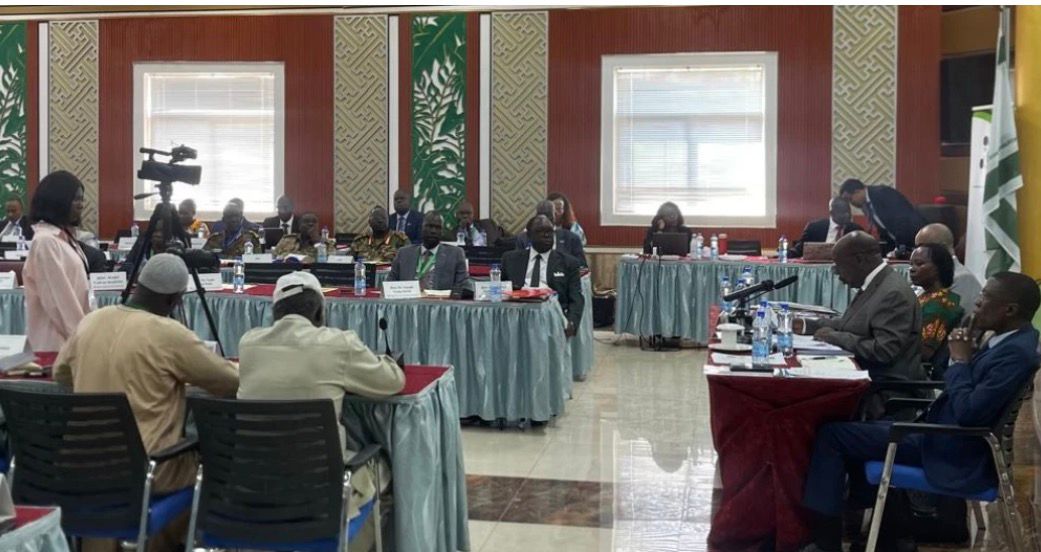
“The political and security situation in the Republic of South Sudan has continued to deteriorate, placing the implementation of the R-ARCSS in serious jeopardy,” said Maj. Gen. George Aggrey Owinow (rtd), Interim Chairperson of RJMEC, during a virtual briefing to the United Nations Security Council on Tuesday.
He noted that the permanent ceasefire has been “severely violated” since March 2025.
South Sudan has witnessed renewed clashes between the South Sudan People’s Defence Forces (SSPDF) and the Sudan People’s Liberation Army-in-Opposition (SPLA-IO) across several states, including Upper Nile, Jonglei, and Unity.
In December 2025, the Ceasefire and Transitional Security Arrangements Monitoring and Verification Mechanism (CTSAMVM) recorded 76 alleged ceasefire violations. These included 21 armed clashes and 25 incidents of violence affecting civilians and humanitarian workers.
The situation further deteriorated in January 2026, with CTSAMVM documenting 87 alleged violations, including 30 clashes between signatory parties and 26 attacks targeting civilians and aid personnel.
However, CTSAMVM’s capacity to monitor and investigate violations has been severely constrained. Years of declining donor funding have significantly reduced its operational and reporting capabilities.
With national elections scheduled for December, financial limitations are making it increasingly difficult to respond effectively to the escalating violence.
To safeguard the fragile peace process, RJMEC issued urgent recommendations to the UN Security Council. The commission urged the Council to press all parties to immediately cease hostilities, engage in genuine and inclusive dialogue, and reactivate key mechanisms for implementing the peace agreement.
Owinow also called for the immediate restoration of the permanent ceasefire and the reunification and professionalisation of security forces under a unified, non-partisan command structure.
The leadership in Juba was urged to preserve peace, promote national reconciliation, resolve political disputes through dialogue, and address disagreements using the mechanisms provided under the R-ARCSS.
RJMEC further emphasised the need for the government to fully reconstitute itself in accordance with the peace agreement, restore SPLM-IO ministerial portfolios, and implement the deal in full while respecting its supremacy.
Finally, the commission called on the UN Security Council to remain actively engaged and closely monitor developments in South Sudan to prevent further deterioration of the peace process.
By Debora Akur Chol, South Sudan
South Sudan’s fragile peace is under growing strain as the political and security situation continues to deteriorate, placing the Revitalised Agreement on the Resolution of the Conflict in the Republic of South Sudan (R-ARCSS) at serious risk, the Reconstituted Joint Monitoring and Evaluation Commission (RJMEC) has warned.
“The political and security situation in the Republic of South Sudan has continued to deteriorate, placing the implementation of the R-ARCSS in serious jeopardy,” said Maj. Gen. George Aggrey Owinow (rtd), Interim Chairperson of RJMEC, during a virtual briefing to the United Nations Security Council on Tuesday.
He noted that the permanent ceasefire has been “severely violated” since March 2025.
South Sudan has witnessed renewed clashes between the South Sudan People’s Defence Forces (SSPDF) and the Sudan People’s Liberation Army-in-Opposition (SPLA-IO) across several states, including Upper Nile, Jonglei, and Unity.
In December 2025, the Ceasefire and Transitional Security Arrangements Monitoring and Verification Mechanism (CTSAMVM) recorded 76 alleged ceasefire violations. These included 21 armed clashes and 25 incidents of violence affecting civilians and humanitarian workers.
The situation further deteriorated in January 2026, with CTSAMVM documenting 87 alleged violations, including 30 clashes between signatory parties and 26 attacks targeting civilians and aid personnel.
However, CTSAMVM’s capacity to monitor and investigate violations has been severely constrained. Years of declining donor funding have significantly reduced its operational and reporting capabilities.
With national elections scheduled for December, financial limitations are making it increasingly difficult to respond effectively to the escalating violence.
To safeguard the fragile peace process, RJMEC issued urgent recommendations to the UN Security Council. The commission urged the Council to press all parties to immediately cease hostilities, engage in genuine and inclusive dialogue, and reactivate key mechanisms for implementing the peace agreement.
Owinow also called for the immediate restoration of the permanent ceasefire and the reunification and professionalisation of security forces under a unified, non-partisan command structure.
The leadership in Juba was urged to preserve peace, promote national reconciliation, resolve political disputes through dialogue, and address disagreements using the mechanisms provided under the R-ARCSS.
RJMEC further emphasised the need for the government to fully reconstitute itself in accordance with the peace agreement, restore SPLM-IO ministerial portfolios, and implement the deal in full while respecting its supremacy.
Finally, the commission called on the UN Security Council to remain actively engaged and closely monitor developments in South Sudan
to prevent further deterioration of the peace process
categories
recent posts
NIGERIA: FG Moves To Unlock 1,600MW Stranded Power With New Grid Company Plan
NIGERIA: Frank Mba, Seven DIGs Retire as PSC Promotes Replacements