
By Deborah Akur Chol, South Sudan
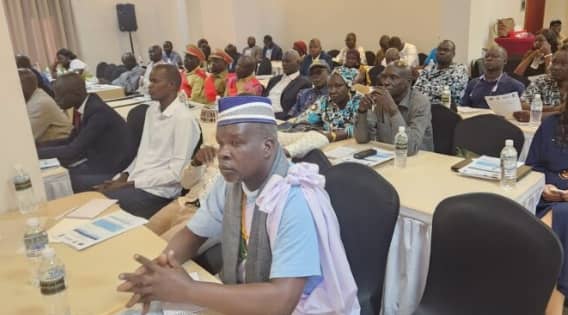
A two-day regional workshop commenced on Tuesday in Juba, bringing together traditional leaders from various South Sudanese states to review grassroots peace efforts and discuss their roles in imminent national processes.
The forum, organized by the U.N. Development Programme (UNDP) in conjunction with the Ministry of Peacebuilding and facilitated by the National Council of Traditional Authorities (COTAL), seeks to evaluate previous peacebuilding resolutions and develop new strategies in anticipation of constitution-making, elections, and transitional justice.
Prince Tadeo Mario Sasa, the Prime Minister of the Azande Kingdom and COTAL Secretary-General, highlighted that the meeting would assess progress since 2023 and identify key priorities for 2025. He emphasized the crucial role traditional leaders will play in mobilizing communities and ensuring that public opinions are taken into account in national decisions.
“Traditional leaders will be instrumental in conveying the message to the grassroots and encouraging community participation,” he stated.
Sasa further noted that customary mediation continues to be vital for resolving local disputes, thereby reducing dependence on external interventions.
Natacha Kunama, UNDP Peacebuilding Advisor, reiterated the agency’s commitment to bolstering traditional authorities, referring to them as “the backbone of peace and reconciliation” in South Sudan. She pointed out that prior engagements resulted in 21 resolutions aimed at reviving traditional leadership roles and promoting inclusivity for women and youth.
She urged workshop participants to translate their discussions into concrete actions, recognizing ongoing challenges such as displacement, climate-related issues, and inter-communal conflicts.
Pia Philip Michael, Undersecretary in the Ministry of Peacebuilding, emphasized the importance of traditional authorities in maintaining community stability, indicating that they would endure beyond fluctuating political landscapes.
“Governments may change, but traditional leaders will remain constant,” he affirmed, encouraging chiefs to prioritize mediation efforts, enhance women’s involvement, and prepare communities for upcoming national processes. He cautioned that elections “should not create divisions” among communities, stating that leaders would be evaluated based on the welfare of their people.
categories
recent posts

NIGERIA: FG Moves To Unlock 1,600MW Stranded Power With New Grid Company Plan
NIGERIA: Frank Mba, Seven DIGs Retire as PSC Promotes Replacements

NIGERIA: Google Expands AI Search Support To Yorùbá And Hausa