By Deborah Akur Chol, South Sudan
The South Sudanese government has issued a stern warning to commercial banks over their alleged role in facilitating illicit capital flight as it unveiled a new national payments system aimed at ensuring compliance within the financial sector.
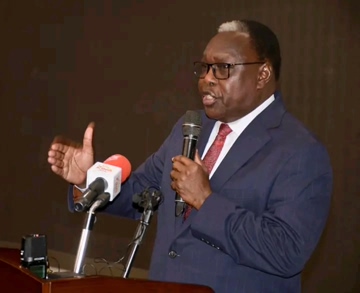
Cabinet Affairs Minister Martin Elia Lomuro announced that the recently launched real-time payment and settlement system by the central bank will serve as a mechanism to enforce the nation’s financial regulations. He claimed that significant amounts of money are being illicitly transferred out of South Sudan, sometimes via airplane, with the aid of financial institutions.
“Effective immediately, we expect full compliance from the banks with this new system,” Lomuro declared during a meeting with bankers and officials in Juba. “The exploitation of our nation’s sovereignty must end, and immediate corrective action is required.”
Lomuro emphasized that the new technology represents a vital step toward achieving economic independence and enhancing transparency within the financial landscape.
According to the Bank of South Sudan, the introduction of the country’s first real-time payment system is designed to modernize the financial sector, increase the speed and security of interbank transfers, and facilitate transactions around the clock across the nation.
Central Bank Governor Dr. Addis Ababa Othow noted that the system will play a crucial role in managing liquidity, supporting effective monetary policy, and safeguarding the value of the South Sudanese pound.
“This system enables real-time payments 24/7,” Othow explained at the launch event. “It aims to promote financial inclusion, particularly for the rural communities that have historically been marginalized.”
However, Minister Lomuro directed much of his criticism toward the alleged misconduct of financial institutions. He expressed a “personal interest” in the new system, citing concerns that private banks in South Sudan have not been adequately regulated.
He accused these banks of denying mortgages and business loans to South Sudanese citizens while extending financing to foreign nationals. “I can identify several buildings and hotels owned by foreigners that have received funding from local banks,” he asserted. “This practice must cease immediately.”
Lomuro further scrutinized the power dynamics within the banking sector, suggesting that some managing directors wield excessive influence. “In this country, it is alarming that some MDs are so powerful they require accompaniment by national security personnel,” he remarked. “This imbalance of power must be addressed urgently.”.
categories
recent posts
NIGERIA: IBEDC Explains Erratic Power Supply Across Franchise
NIGERIA: FG Moves To Unlock 1,600MW Stranded Power With New Grid Company Plan