By Deborah Akur Chol, South Sudan
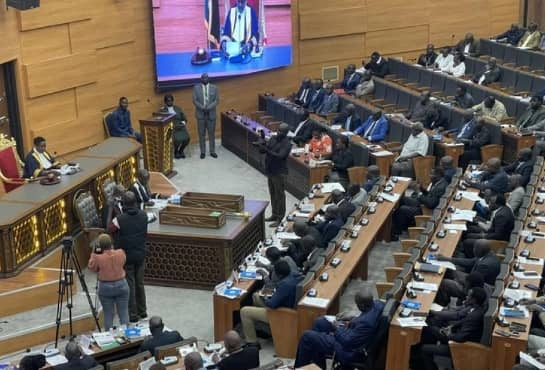
South Sudan’s parliament approved the long anticipated National Youth Policy 2025, a significant initiative aimed at empowering the country’s predominantly young population, which faces high unemployment rates and the repercussions of past conflicts.
The newly passed policy stipulates that youth will occupy 20% of positions in both national and state governments and directs that 10% of the national budget be earmarked for youth initiatives. The policy classifies youth as individuals aged between 15 and 35 years, in a nation where more than 70% of the population is under the age of 30.
Originally drafted in 2013, the legislation also revamps the current youth union, transforming it into the South Sudan National Youth Council, aligning it with the standards of the East African Community, to which South Sudan belongs.
Deng Tong, Deputy Chairperson of the parliament’s Joint Committee for Legislation and Justice, Youth and Sports, praised the policy as the result of “nearly two decades of reflection, consultation, and thorough deliberation.”
“This policy is designed to provide a comprehensive and coordinated legislative framework for youth development,” Tong stated during an extraordinary parliamentary session. He characterized it as a “binding legal instrument featuring a clear mandate, accountability mechanisms, and designated funding.”
The definition of “youth” is formally established in the policy as individuals aged 15 to 35. The updated South Sudan National Youth Council aims to create stronger representation for youth, adhering to regional standards.
Additionally, Tong emphasized that the policy complements efforts to provide vocational training and entrepreneurship education.
“Without this policy, many of our youth have joined rebel groups,” Abalang underscored, referencing local militant organizations.
Despite some opposition regarding the budget allocation, with several lawmakers advocating for a reduction, Nyayang Johnson Lok Riek, a parliamentary representative from Jonglei state, stood firm in support of the 10% allocation.
“I wholeheartedly support the proposal for 10% of the budget to be allocated to youth programs, as this amount is crucial for empowering our youth,” Nyayang expressed.
Debate ensued among lawmakers regarding the appropriate age range for youth, with opinions divided between a definition of 15 to 35 and a wider bracket of 18 to 45. Some argued for alignment with the 2008 penal code, which defines adulthood as beginning at age 18.
The national youth policy was reintroduced in 2024 by former Minister of Youth and Sports, Joseph Geng Akech.
With the policy now passed, Permina Awerial Aluong, the parliament’s second deputy speaker, acknowledged the commitment of members who contributed their time towards the long-delayed legislation.
The government’s next challenge will be to implement the policy effectively and secure the promised funding in the context of ongoing economic difficulties and a delicate peace process.
Edmund Yakani, Executive Director of the Community Empowerment for Progress Organization (CEPO), hailed the parliament’s endorsement of the National Youth Policy as a “milestone” achievement that addresses key advocacy goals.
Yakani, a prominent civil society leader, maintained that the focus now must be on the effective implementation of the policy.
“We are proud of the success of our campaign and advocacy surrounding the youth policy,” he declared. “The next crucial step is to ensure dissemination and ownership of the policy by the youth, alongside monitoring for genuine, effective, and timely implementation.”
Last week, a youth advocacy organization urged the government to swiftly pass and implement long-overdue youth policies, warning that inaction leads to increasing discontent.
Florence Agiba, Executive Director of the youth-led group Markaz Al Salam, called on officials to turn critical policy proposals “from draft documents into tangible reality.”
“Drafting policies is vital, but it is just the beginning,” Agiba stated at a recent event in Juba labeled “Policy Unplugged.” “If these policies are not enacted, funded, and executed, they remain nothing more than words.”
categories
recent posts

NIGERIA: FG Moves To Unlock 1,600MW Stranded Power With New Grid Company Plan
NIGERIA: Frank Mba, Seven DIGs Retire as PSC Promotes Replacements