By Deborah Akur Chol, South Sudan
The South Sudan Revenue Authority (SSRA), in collaboration with the Ministry of Finance and Planning and the World Bank, has successfully conducted a workshop focused on Withholding Tax. This event, held on Tuesday, aimed to enhance tax compliance and address challenges associated with donor-funded projects.
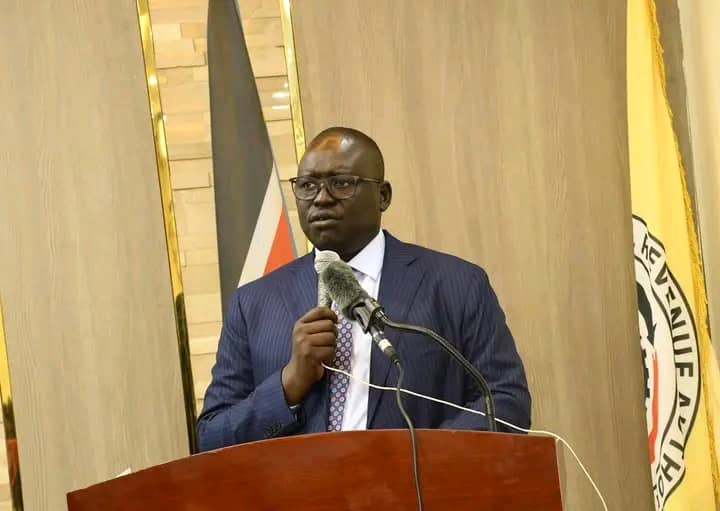
During the opening session at the SSRA headquarters, Benjamin Ayali Koyongwa, Undersecretary for Planning in the Ministry of Finance, emphasized that individuals managing projects are not exempt from tax obligations to the government. He clarified that while project managers must pay taxes, certain items, such as equipment and operational supplies, are exempt from taxation.
“The individuals managing the projects are not exempt. However, equipment, such as vehicles used in project operations, is exempted, particularly concerning donor-funded projects,” said Ayali.
Ayali referenced the Revenue Authority Act of 2016, which empowers the SSRA to collect taxes on behalf of the government, stating that only the Revenue Authority is authorized to collect taxes.
“If anyone other than an appropriate person approaches you to demand taxes, you should reject that,” he advised.
Simon Akuei Deng, Commissioner-General of the SSRA, highlighted the agency’s ongoing efforts under the Ministry of Finance’s guidance to modernize South Sudan’s tax administration through digital transformation. He announced that the SSRA plans to initiate consultations on introducing a value-added tax (VAT) in the near future, which he referred to as a key revenue source in the region.
Deng explained that the current sales tax rate for the 2024-2025 period stands at 1.7%, significantly lower than the minimum of 30% in other East African Community (EAC) regions.
“This situation necessitates South Sudan’s adoption of VAT, a consumption tax. Alongside the EAC, we will be implementing an electronic receipt and invoice system to digitize transactions, enhance accountability, and reduce human influence in tax administration,” Deng stated.
He asserted that these reforms would improve efficiency and offer donor projects greater assurance, transparency, and simpler processes for meeting their tax responsibilities.
In a further development, Deng informed that the Commissioner of the Domestic Tax Revenue Division has been directed to waive penalties related to audits of contractors, subcontractors, and suppliers involved in donor-funded projects until November 4, 2025.
“According to the law, late payments incur penalties. However, due to our shortcomings in engaging and informing you, there will be no penalties for any tax obligations accrued from November 4, 2025, backward,” Deng announced.
He urged, “Please ensure that any withheld taxes are remitted to the government account without penalties.”
To further bolster accountability and transparency in revenue collection, the SSRA established a special tax team earlier this year. This team is responsible for ensuring that development partners meet their tax obligations, encouraging collaboration among agencies and contractors working with the World Bank, African Development Bank, and other donors to promote accountability and transparency.
categories
recent posts
NIGERIA: FG Moves To Unlock 1,600MW Stranded Power With New Grid Company Plan
NIGERIA: Frank Mba, Seven DIGs Retire as PSC Promotes Replacements