By Deborah Akur Chol, South Sudan
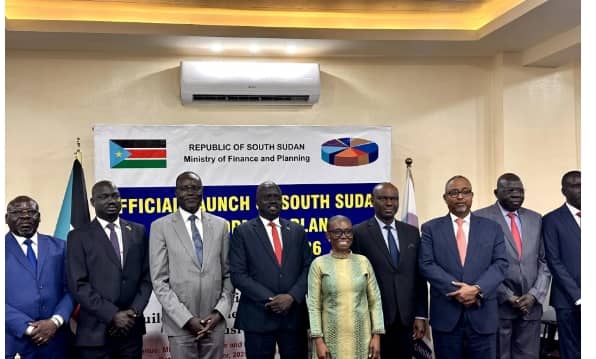
The Ministry of Finance and Planning has initiated the formulation process of the South Sudan Development Plan (SSDP) for 2026-2036, a strategic initiative aimed at guiding the nation from fragility towards sustainable development, peace, and prosperity.
The SSDP is being developed during a crucial period in South Sudan’s journey as it seeks to address the lingering impacts of conflict, economic turmoil, and humanitarian crises.
Rooted in the principles of inclusivity, national ownership, and sustainability, the plan aims to create a cohesive framework that aligns national priorities, sectoral strategies, and external support under a common development vision.
During the launch event in Juba, Athian Diing Athian, the Minister of Finance and Planning, spoke about the transformative potential of the SSDP.
”This occasion marks a pivotal moment in our nation’s journey, signifying a step towards a future characterized by stability, resilience, and sustainable development. The SSDP serves as a strategic framework to turn the aspirations of the South Sudanese people into reality,” Diing stated on Wednesday.
He emphasized that “the success of the SSDP is a collective responsibility, dependent on the strength of our leadership. As we unveil this plan, we are embracing the role of society by collaborating with government institutions at both national and sub-national levels, as well as with development partners, academia, the agricultural community, civil society, and the private sector.”
Despite holding significant oil reserves that contribute to the majority of government revenue, South Sudan faces numerous challenges including soaring inflation and a humanitarian crisis affecting nearly 75% of its population. The ongoing conflict in neighboring Sudan has further disrupted oil exports and trade routes, hampering recovery efforts.
Nevertheless, the architects of the SSDP remain optimistic that a new approach grounded in coordination and evidence-based planning can change the current trajectory.
Anita Kiki Gbeho, the UN Humanitarian Coordinator in South Sudan, expressed the United Nations’ support for the SSDP process. “I welcome this opportunity for engagement because the United Nations is committed to assisting South Sudan in achieving its vision of a peaceful, prosperous, and stable nation, ensuring that no one—especially the most vulnerable women, youth, and marginalized individuals—is left behind,” Kiki remarked.
The SSDP has also garnered strong support at the parliamentary level. Hon. Rev. Michael Ayuen, Chairperson of the Standing Specialized Committee on Finance and Planning at the Transitional National Legislative Assembly, highlighted the significance of national alignment. “This plan will serve as a critical tool for our government to ensure that national resources are appropriated effectively to drive development in our country,” Ayuen stated.
He underscored the inclusive methodology in the plan’s formulation, saying, “A significant aspect of this initiative is the nationwide consultations designed to ensure that the development plan reflects the aspirations and expectations of the people of South Sudan.”
The SSDP (2026–2036) aims to learn from the challenges faced by previous strategies, such as the Revised National Development Strategy (R-NDS) 2021–2024, which encountered implementation issues due to low investment, poor coordination, and inadequate engagement at state levels.
By emphasizing broader stakeholder engagement, establishing stronger connections between planning and budgeting, and fostering commitment across all societal levels, the government and its partners aspire for the SSDP to serve as a landmark roadmap toward recovery, resilience, and transformation.
categories
recent posts

NIGERIA: FG Moves To Unlock 1,600MW Stranded Power With New Grid Company Plan
NIGERIA: Frank Mba, Seven DIGs Retire as PSC Promotes Replacements