By Onoja Baba, Nigeria
As tensions escalate between Israel and Iran, a surprising fault line has emerged in Nigeria, a West African country situated a million miles away from the Middle East.
The conflict, rooted in complex geopolitics and historical rivalries, is now being filtered through a deeply religious and polarized Nigerian lens, where many citizens are taking sides, not necessarily based on facts but on faith, identity, and emotional allegiances.
According to recent estimates, about 1.7 million Muslims live in Israel. They represent roughly 18 per cent of the country’s population, according to the Israel Central Bureau of Statistics. Most of them are Arab Muslims, primarily Sunni, residing in areas like East Jerusalem, the Galilee, and the Negev.
In contrast, Iran is an Islamic republic with a predominantly Muslim population. Over 99 per cent of Iranians are Muslims, the vast majority of them Shia. That translates to more than 87 million Muslims in a country of about 88 million people, as reported by CIA World Factbook.
Christians in Israel are estimated to be about 185,000, which is slightly over one per cent of the population, according to the Pew Research Center. Most of them are Arab Christians, though there is a small number of non-Arab Christians, including immigrants and converts.
In Iran, Christians form a small but historically significant minority. Officially, around 117,000 Christians are recognized—mainly Armenians and Assyrians—according to Iran’s Statistical Center. However, broader estimates, such as those by Open Doors International, including underground house churches and converts from Islam, suggest the number may range between 300,000 and 800,000.
Israelis are citizens of the State of Israel. While the majority are Jewish, the country is home to Muslims, Christians, Druze, Bedouins, and others. Hebrew and Arabic are the major languages, and Israeli society is ethnically and religiously diverse as noted by CIA World Factbook.
Iranians are citizens of the Islamic Republic of Iran. While most are ethnically Persian, the population also includes Azeris, Kurds, Arabs, Baluchis, and others. The official language is Persian (Farsi), and Shia Islam is the dominant religion, per Britannica Online.
Looking at the complex mix of religion, ethnicity, and culture in both countries, raises the question of why many Nigerian Christians automatically align with Israel while many Nigerian Muslims lean toward Iran.
Nigeria is a deeply religious country. It is often called the religious capital of Africa. Religion drives politics, personal identity, and even public opinion. As Karl Marx once said, religion is the opium of the masses. That holds particularly true for Nigeria, where sentiment often overrides objectivity.
However, since Israel is not a Christian country and is mostly populated by Jews, while Iran, though Muslim, is not Arab and also houses Christian minorities, it becomes baffling why Nigerians treat the conflict as a matter of religious loyalty.
The current phase of the conflict began on June 13, 2025, when Israel launched airstrikes across Iran, targeting nuclear and military sites. Iran responded on June 14 by firing hundreds of missiles and drones toward Israel, causing civilian casualties At least 240 people were injured and Soroka Hospital was hit in Beersheba on June 19 as reported by The Guardian.
The Nigerian government condemned the strikes on June 16, calling them a dangerous escalation that violated international law and risked regional stability. The statement urged restraint and respect for diplomatic norms.
However, many Nigerians especially Christians disagreed with President Tinubu’s position. One of them, Johniko Abah, voiced his dissent on Facebook, via a writing he attributed to his Jewish friend saying, “You said we should leave our promised land that it belongs to you, where do you expect us to go, go back to Egypt? Never.
“You said you must destroy us by pointing gun on our face and you expect us to fold our hands so you can destroy us? Never.
My brother you are a joker, I can’t fold my hands seeing you trying to destroying me.
“God have promised and lead us to this place and He will continue to protect us till Messiah come.
We are here fighting for survival. It’s high time the world understand.”
Abah is not alone. Many Nigerian Christians believe that the Israelites are their spiritual ancestors. Christianity, they argue, originated in Israel. According to Romans 11:17-18, believers are grafted into the olive tree of Israel. This forms a deep-rooted belief in standing with Israel.
For Nigerians like Aisha Lawal and Maji Isah, the sentiment is the reverse. Both Nigerian Muslims are active on social media, rooting for Iran. They have repeatedly posted content attacking Israel and supporting Iran, sometimes even relying on questionable or unverified sources.
In one of her posts, Aisha wrote, “Iran is winning in real life while Israel is winning on social media and Western news channels. Leave propaganda for the West. Nobody sabi am reach them.” Her comments are regularly liked, shared, and praised by followers who appear to be mostly Muslim based on their usernames.
Maji Isah has followed the same path. Since the conflict began, his page has been flooded with pro-Iran posts. Some of his followers question his sources or motives, but he remains undeterred. One of his posts read, “Israeli Benjamin Netanyahu fearful and allegedly almost peed on his pants as debris from an Iranian attacked building fall behind him. This is a human being who thought himself a lion.”
Meanwhile, some Nigerians have raised fair questions. Why should Israel attack Iran for developing nuclear weapons when Israel itself has them? Others counter that Iran has a long history of backing extremist groups and might use nuclear capabilities through proxies to target Israel or even the United States.
As the conflict rages on, Nigerians remain sharply divided. For many, it is no longer about politics or diplomacy. It is a fight of faith. And whichever side they stand on, they believe their faith must win regardless of who is wrong or right.
The ongoing tension between Israel and Iran is not a direct battle of Muslims versus Christians. It is geopolitical, ideological, and historical. Still, religion cannot be separated from the discourse.
If someone argues that religion is at the heart of the issue, they may be right. If another says it’s not about religion, they are not wrong either. The conflict is layered. Both angles hold weight, and no single perspective holds the monopoly of truth.
An educated mind should be open, flexible, and ready to accommodate multiple sides of a complex situation. Facts should be examined, not twisted to fit a bias.
While politics may drive the headlines, religion, race, and ancestry are often woven into the roots of political conflict, especially in the Middle East. That reality cannot be ignored.
DISCLAIMER: This opinion does not reflect the image of African Culture TV. This is purely the opinion of the writer.
categories
recent posts
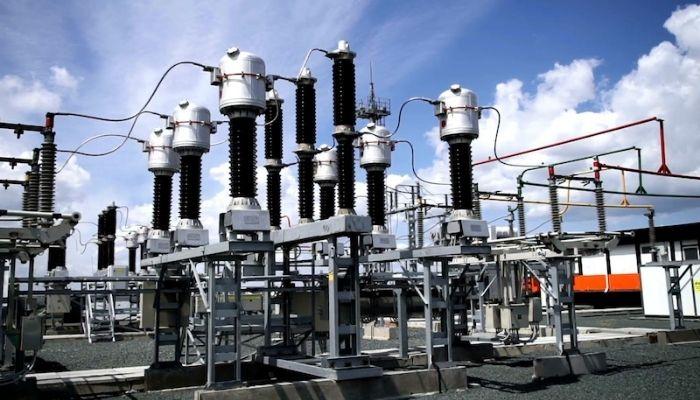
NIGERIA: FG Moves To Unlock 1,600MW Stranded Power With New Grid Company Plan
NIGERIA: Frank Mba, Seven DIGs Retire as PSC Promotes Replacements
NIGERIA: Google Expands AI Search Support To Yorùbá And Hausa