
By Balogun Azeez, Ilorin
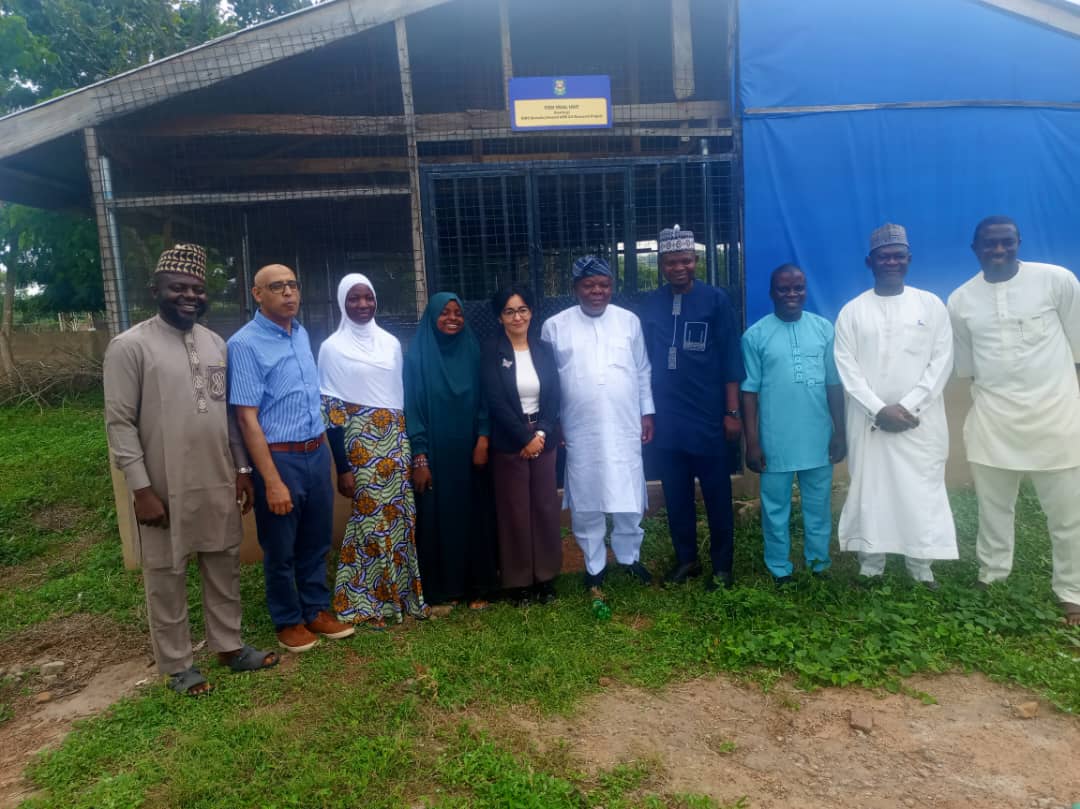
International Development Research Centre (IDRC), Canada, has said it is excited over the progress made so far by the Nigerian researchers working to develop and validate an alternative to antimicrobials for ruminants and aquaculture.
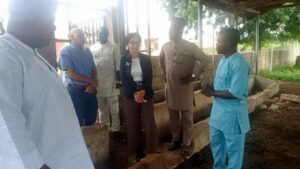
International Development Research Centre (IDRC), Canada and the UKaid/Global Antimicrobial Resistance Innovation Fund (GAMRIF) is funding a project tagged: “Bacteriocin-rich Extract from Engineered Lactic Acid Bacteria as an Antibiotic Alternative for Therapeutic and Prophylactic Use in Ruminants and Aquaculture (BAC4RumA), aimed at tackling AMR and developing cost-effective, locally produced alternatives to antibiotics.
IDRC’s Dr. Najete Safini, who visited the research team at the University of Ilorin, described antimicrobial resistance (AMR) as a “silent pandemic,” warning that misuse of antibiotics threatens global food systems.
“The solution must be local — Nigerian researchers developing Nigerian medicines,” she said.
Dr Safini commended the research team for the progress made so far, saying the IDRC is funding the project to develop indigenous solutions as an alternative to antibiotics for livestock and aquaculture in Nigeria.
“I’m here to monitor and visit this amazing team at the University of Ilorin. They are amazing team. They are really fantastic. I’m really happy with what they are doing so far. They are really outstanding researchers. So I’m really happy,” she added.
The UK Team Leader, Dr. Mahmoud Eltholth, a lecturer in global health at Royal Holloway University of London, expressed confidence that the team would deliver acceptable alternative to antimicrobials.
“The ambition here is to have an alternative to antibiotic, a solution to such a global challenge of antimicrobial resistance. We are transdisciplinary team. We have different specialists working together from different institutes toward developing and validating bacteriocene extract as an alternative to antibiotic to be used for cattle, for small ruminants, and for aquaculture.”
“This goal was open for low and middle income countries. And when we were looking for partners who we can trust and deliver, we went for Unilorin Vet school because I have been working with Ismail (Nigerian team lead) in a couple of projects before this. So, we applied and we were successful. Out of 300 applications, seven were funded. We are one of them,” Dr. Eltholth.
For his part, the leader of the Unilorin Research Team, Dr. Ismail Ayoade Odetokun, explained that the team had interacted with with across different locations to understand current use of antibiotics, and integrate their experiences into the development of this new solution.
“We’ve interacted with farmers on the focus group discussion. We know where the problem is and we are ready to work together to solve the problem. The farmers are actually willing to be part of this research.”
“Some farmers are actually begging us to come with the product and do the trials on their farms and they are willing to use it, though we still have some more research to make it wholesome and market ready,” he said.
Dean, Faculty of Veterinary Medicine, University of Ilorin, Prof. Saliu Ameen assured the visiting team that the project would be fruitful and the whole world will accept it.
Drs Ismail Odetokun and Afisu Basiru (University of Ilorin, Nigeria) and Dr Mahmoud Eltholth (Royal Holloway University of London, UK) have earlier led stakeholders’ participatory workshops with farmers and veterinarians discussing the challenges and opportunities for using alternatives to antibiotics in ruminants and aquaculture.
categories
recent posts

NIGERIA: FG Moves To Unlock 1,600MW Stranded Power With New Grid Company Plan

NIGERIA: Frank Mba, Seven DIGs Retire as PSC Promotes Replacements


NIGERIA: Google Expands AI Search Support To Yorùbá And Hausa