By Ameenat Hamzat, Lagos, Nigeria
The Federal Government has intensified efforts to eliminate lead exposure and phase out the production and use of lead-based paints in Nigeria by the year 2030.
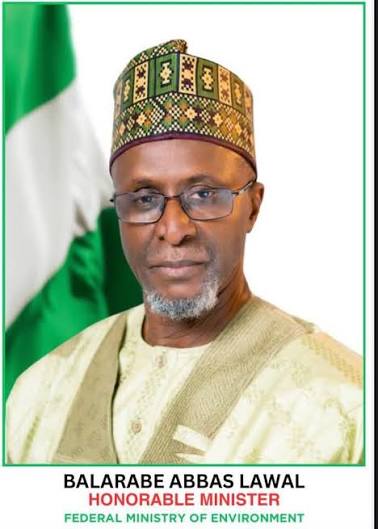
The Minister of Environment, Balarabe Lawal, announced this on Thursday in Abuja during the commemoration of the 2025 International Lead Poisoning Prevention Week, themed “No Safe Level: Act Now to End Lead Exposure.”
Lawal described lead poisoning as one of the most preventable environmental health problems but noted that millions of Nigerians, especially children, remain at risk of exposure.
The Minister said: “There is truly no safe level of lead in the human body. Even minimal exposure can cause irreversible brain damage, learning disabilities, and reduced IQ in children.”
He explained that the Ministry of Environment, in collaboration with the Standards Organisation of Nigeria (SON) and the National Environmental Standards and Regulations Enforcement Agency (NESREA), has developed and enforced national standards to limit the amount of lead in paints and related products.
Lawal disclosed that the federal government has completed the remediation of contaminated sites in Zamfara, Niger, and Kaduna States, while investigations are ongoing in Sokoto State. He added that efforts are being made to promote safer mining and recycling practices and to strengthen environmental surveillance in high-risk communities.
The minister also highlighted the National Lead-Free Nigeria Initiative, which aims to eliminate lead from paints, batteries, and consumer goods through stricter enforcement, cleaner technology, and nationwide public awareness campaigns.
“Lead poisoning is entirely preventable. We must act urgently to remove lead from our homes, schools, and workplaces to protect our children and guarantee a healthier future,” Lawal said.
In her remarks, Nanlop Ogbureke, Nigeria Director of Resolve to Save Lives (RTSL), commended the government’s commitment to tackling the issue, while stressing the need for sustained awareness and investment in safer production systems.
He mentioned: “Lead poisoning is entirely preventable, yet it continues to affect children and families across Nigeria. Its impact on brain development, learning potential, and long-term health is profound. No child should lose their future because of avoidable exposure to a toxic substance.”
Also speaking, Bahijjahtu Hadiza Abubakar, Director of Pollution Control and Environmental Health at the Ministry, revealed that the government has gazetted the 2023 National Environmental (Chemicals and Pesticides) Regulations and the 2024 National Environmental (Battery Control) Regulations to strengthen control of lead in paints and batteries.
However, Abubakar acknowledged that weak enforcement and low public awareness still allow some paints in the market to contain lead levels above international limits.
“Prevention remains our strongest tool. By eliminating lead at its source, we can protect our children’s health and secure a safer environment for all,” she added.
The ministry reaffirmed its commitment to working with partners, regulators, and local communities to achieve a lead-free Nigeria by 2030.
categories
recent posts
NIGERIA: FG Moves To Unlock 1,600MW Stranded Power With New Grid Company Plan
NIGERIA: Frank Mba, Seven DIGs Retire as PSC Promotes Replacements