
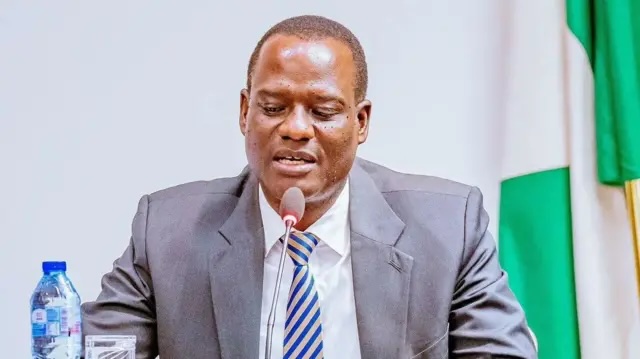
By Ameenat Hamzat, Lagos, Nigeria
The Federal Ministry of Finance has dismissed claims of “hidden spending” and diversion of federation revenue, describing such interpretations as a misrepresentation of the World Bank’s latest Nigeria Development Update.
In a press statement signed by the Honourable Minister of State for Finance, Taiwo Oyedele, on April 19, the Ministry said recent media reports wrongly portrayed Federation Account Allocation Committee (FAAC) deductions as waste or missing funds, insisting that the figures reflect legitimate fiscal operations.
“The misreporting in question incorrectly characterises FAAC deductions as ‘waste’ or missing funds. This is incorrect,” the statement said.
According to the Ministry, FAAC deductions cover statutory transfers, savings and investments, security-related expenditures, cost-of-collection charges, and refunds to Ministries, Departments and Agencies (MDAs), as well as transfers benefiting subnational governments.
It emphasised that such allocations are lawful and do not constitute leakages within the system.
“It is important to emphasise that refunds and transfers to states and other tiers of government are not leakages. They represent legitimate fiscal flows,” the Ministry stated.
The statement also accused some commentators of selectively using outdated data while ignoring ongoing reforms highlighted in the World Bank report.
It noted that recent measures, including an Executive Order to safeguard petroleum revenue remittances, are already improving transparency and are projected to increase distributable revenues by about 0.4 percent of GDP annually.
Highlighting broader economic indicators, the Ministry said the World Bank report presents a more positive outlook on Nigeria’s economy, pointing to improvements in growth, inflation trends, external reserves, and debt sustainability.
“Economic growth is becoming more broad-based across sectors… Nigeria’s external position has strengthened significantly,” the statement noted.
The Ministry further clarified that the World Bank did not conclude that Nigeria’s fiscal system is failing but rather acknowledged that reforms are yielding results and should be sustained.
“The World Bank does not conclude that Nigeria’s fiscal system is collapsing… rather, it states that reforms are working and must be deepened,” it added.
Reaffirming its commitment to transparency and fiscal discipline, the Federal Government urged stakeholders and the media to engage responsibly with economic data.
“An accurate understanding and responsible reporting of fiscal information are critical to maintaining confidence in Nigeria’s reform traj
ectory,” the statement said.
categories
recent posts
IMF Says Malawi Making Progress on Economic Recovery Reforms
NIGERIA: Makinde Campaign Sets 68m-Vote Target As APM Kicks Off 2027 Drive
NIGERIA: INEC Assures On Election Integrity As 2027 Polls Enter Final 100-Day Countdown

Messi Ends Argentina Career on a High