
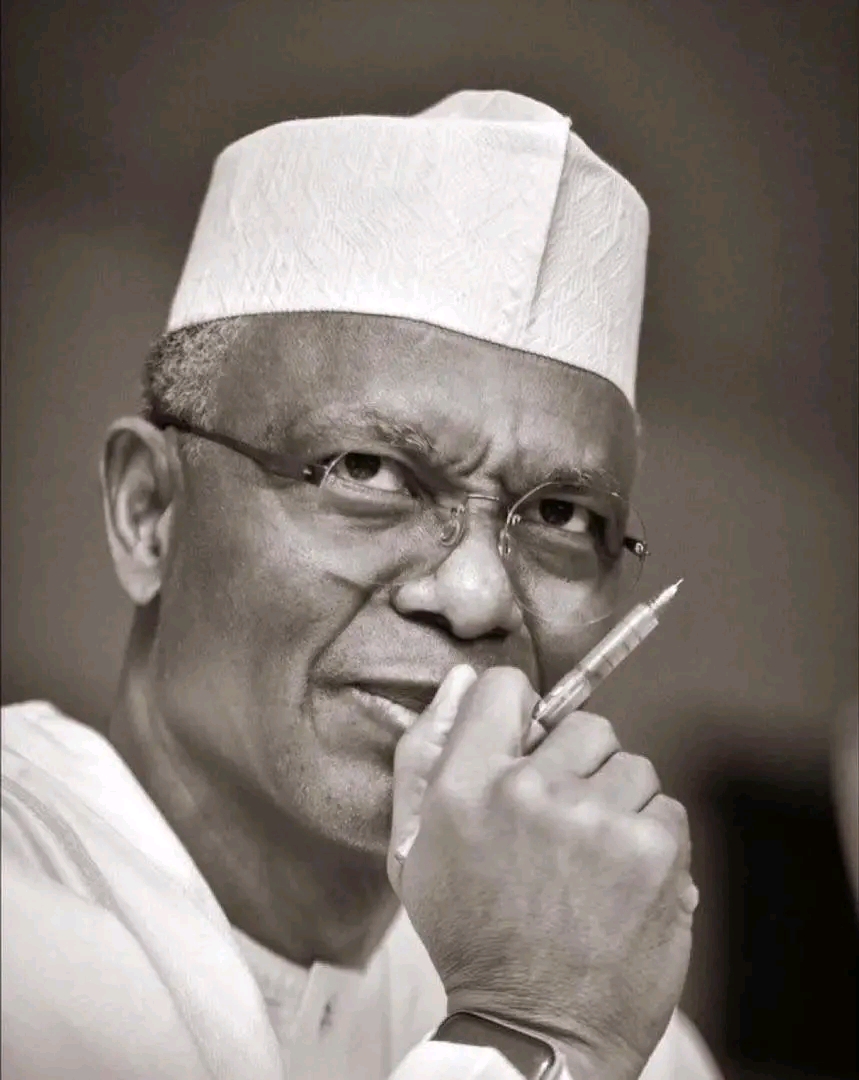
By Onoja Baba, Nigeria
Former Kaduna State Governor, Malam Nasir El-Rufai, has declared that Nigeria’s persistent economic underperformance is not due to a lack of talent, capital or ideas, but rather a fundamental failure to channel the nation’s best minds into productive activities.
In a strongly-worded article released on Wednesday titled “Nigeria’s Growth Crisis Is a Talent-Allocation Crisis,” published on Wednesday, El-Rufai argued that the country’s brightest and most capable citizens are being systematically drawn into rent-seeking activities, such as political brokerage, regulatory manipulation and administrative contestation, because these offer faster and safer returns than building businesses, innovating or producing goods and services.
“Nigeria is often described as a paradox. We are a nation of extraordinary human capital, energetic, inventive, and resilient, yet our economic outcomes fall persistently short of our potential,” he wrote.
He explained that when the highest returns to talent come from proximity to state power rather than entrepreneurship and production, growth becomes shallow, productivity remains weak, and prosperity fails to spread widely.
“People do not wake up intending to harm their country. They respond rationally to incentives. So the right question for Nigeria is not ‘Why are people corrupt?’ It is: ‘What activities does our system reward most handsomely?’” El-Rufai stated.
The former governor painted a sobering picture of Nigeria’s current reality: GDP growth of about 4.1% in 2024, GDP per capita of around $1,084, informal employment accounting for 93% of the labour force, and a tax-to-GDP ratio of only 8.2%, one of the lowest in Africa.
He noted that unreliable power supply (averaging just over 5,300 megawatts for over 200 million people), inefficient ports, and a business environment that penalises formal growth have made scaling enterprises extremely difficult, pushing talented individuals towards rent-seeking instead.
Drawing from global evidence, El-Rufai observed that countries which successfully direct top talent into engineering, science, and production tend to grow faster, while those where talent clusters in rent-oriented legal and administrative roles grow more slowly.
He concluded with a clear reform objective: “Make value creation more rewarding than value capture.”
This, he said, requires shrinking discretionary power in government, making rules predictable and transparent, enforcing property rights quickly, and making it easier to scale businesses than to remain small and hidden.
El-Rufai warned that Nigeria stands at a crossroads. If the system continues to reward brokers over builders, the country will keep underperforming. But if it begins to reward producers and exporters, rapid and durable growth will follow.
The article has sparked intense debate online, with many Nigerians describing it as a bold and uncomfortable diagnosis of the nation’s deepest economic challenge.
El-Rufai ended by stating that Nigeria does not lack talent. It must simply
learn how to reallocate it.
categories
recent posts
IMF Says Malawi Making Progress on Economic Recovery Reforms
NIGERIA: Makinde Campaign Sets 68m-Vote Target As APM Kicks Off 2027 Drive

NIGERIA: INEC Assures On Election Integrity As 2027 Polls Enter Final 100-Day Countdown

Messi Ends Argentina Career on a High