
By Ameenat Hamzat, Lagos, Nigeria
The National Economic Council (NEC) has approved the adoption of 112 as Nigeria’s unified national emergency number, in a move aimed at strengthening rapid response systems and improving coordination across agencies during crises.
The Council also approved the establishment of a multi-agency implementation committee to be led by the Office of the Vice President in collaboration with the Nigerian Communications Commission (NCC), to drive the rollout and coordination of the emergency response framework nationwide.
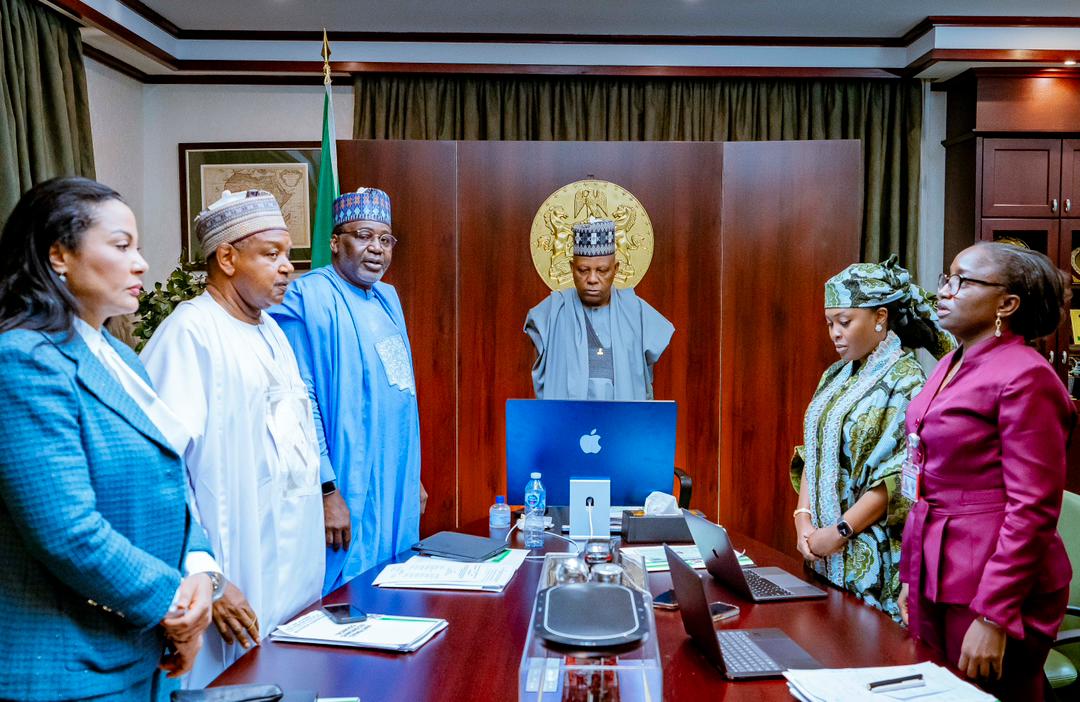
The decision was reached at the 157th NEC meeting held virtually and chaired by Vice President Kashim Shettima.
The development was contained in a statement signed by the Senior Special Assistant to the President on Media and Communications (Office of the Vice President), Stanley Nkwocha, on April 30, 2026.
Speaking during the meeting, Vice President Shettima emphasised the urgency of a unified emergency system, stressing that citizens require immediate assistance rather than administrative delays in moments of crisis.
“This is not only a technical reform. It is a test of the state’s humanity. In moments of fire, accident, robbery, medical emergency, flood, violence, or panic, citizens do not need bureaucracy. They need response,” he said.
He added that while the 112 emergency line already exists, the focus now is on standardisation, coordination, public awareness, and institutional trust to ensure its effectiveness nationwide.
Beyond emergency response, NEC also directed the Federal Ministry of Finance to expedite the release of approved funds for the rehabilitation of police training institutions across the country, following a presentation by an ad hoc committee led by Enugu State Governor, Peter Mbah.
The Council further received updates on key national accounts as of April 27, 2026, including the Excess Crude Account, which stood at $535,823.39, alongside balances in the Stabilisation and Natural Resources Accounts.
On public health, NEC approved the expansion of its ad hoc committee on polio eradication to include seven additional high-risk states, Jigawa, Kaduna, Bauchi, Niger, Yobe, Borno, and Adamawa, to strengthen coordination and accelerate vaccination efforts set to commence in selected states from May 2.
In the creative sector, Council endorsed the Renewed Hope Cultural Project and “Naija Season,” a unified national cultural and tourism calendar, approving a contribution framework requiring sub-national governments to support local implementation efforts.
NEC also reviewed progress on the National Industrial Policy (2025), highlighting its focus on key sectors such as agro-processing, solid minerals, oil and gas, and pharmaceuticals, with projections indicating significant revenue generation and job creation over the next two decades.
Vice President Shettima urged stakeholders at all levels of government to prioritise impactful decisions, noting that governance must translate into tangible outcomes for citizens.
“History will not ask how many meetings we held. It will ask what chan
ged because we met,” he said.
categories
recent posts
IMF Says Malawi Making Progress on Economic Recovery Reforms
NIGERIA: Makinde Campaign Sets 68m-Vote Target As APM Kicks Off 2027 Drive
NIGERIA: INEC Assures On Election Integrity As 2027 Polls Enter Final 100-Day Countdown

Messi Ends Argentina Career on a High